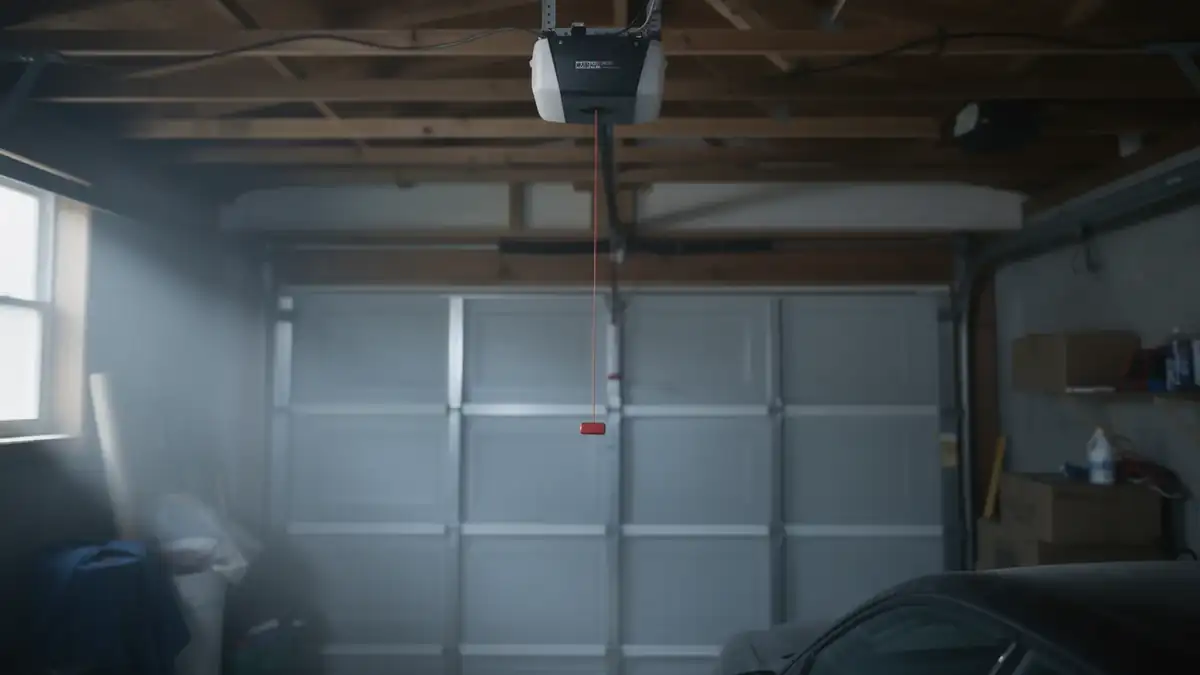
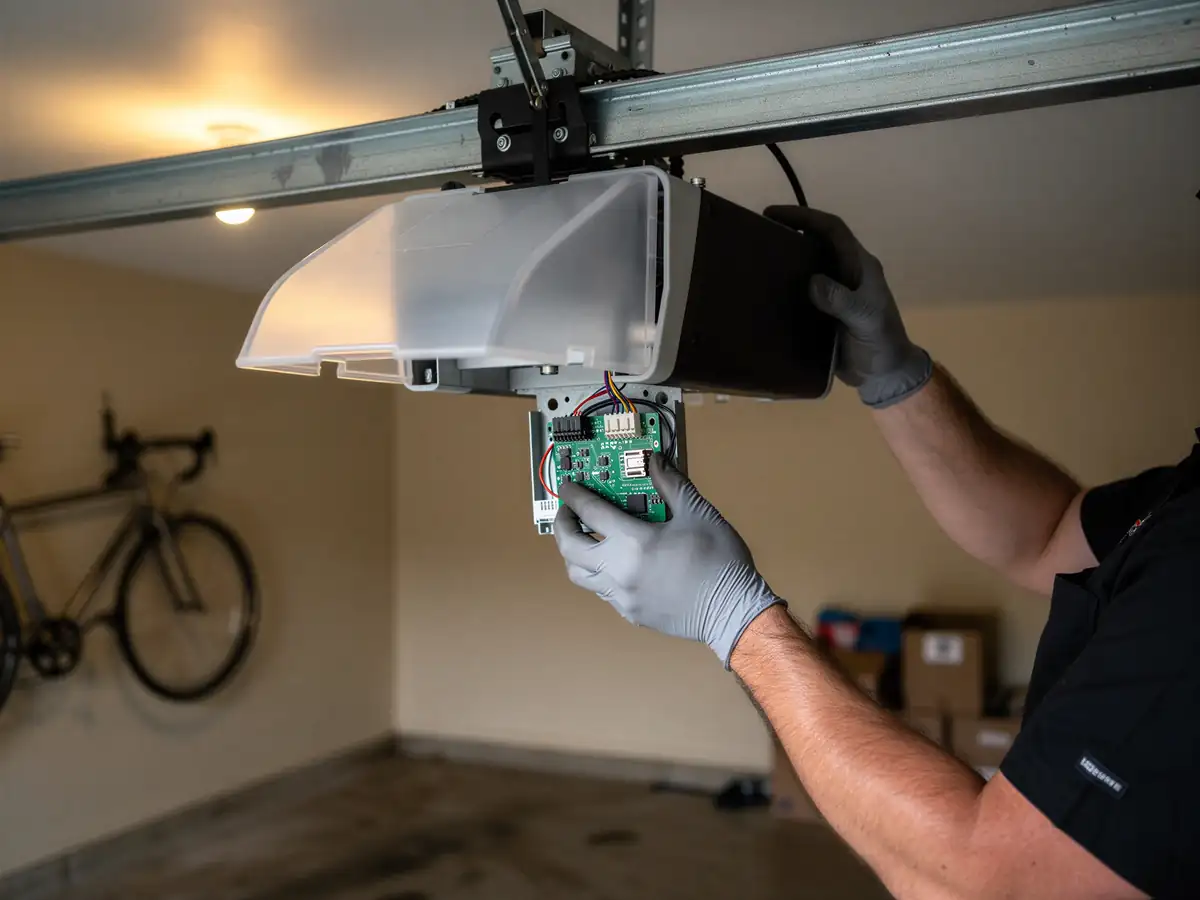
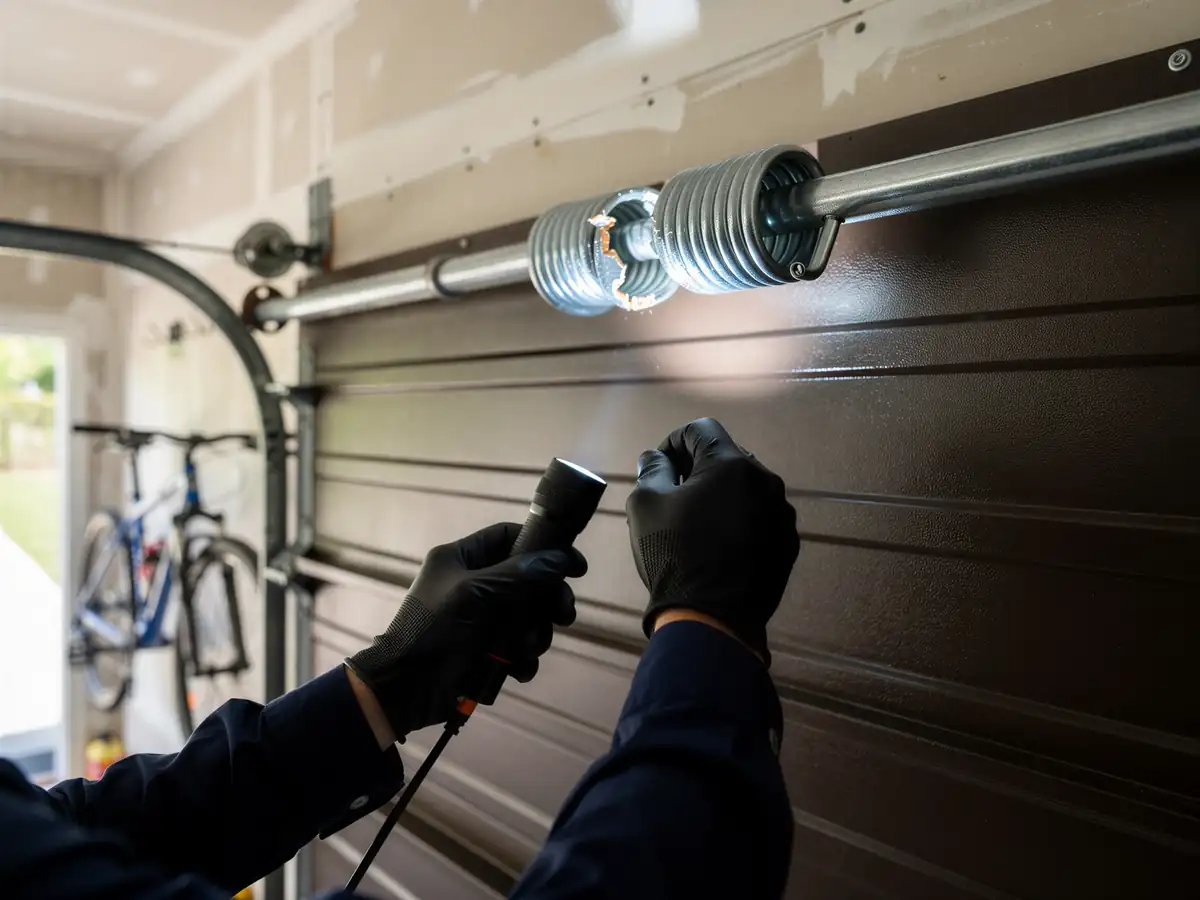
Most houses on this side of the valley, across the 26 areas that make up Santa Clara's housing stock, went up between 1947 and 1987, with the median build year sitting around 1964. That matters for openers because a garage built in that window usually got wired for a single light fixture and maybe one outlet, not for a motor drawing power on its own dedicated circuit. When the power cuts, a lot of these openers don't fail gracefully. They lose their position memory, the travel limits drift, and the belt or chain can bind halfway through a cycle instead of reversing cleanly. On a newer build with a dedicated circuit and a battery backup unit, a blip barely registers. On a 1960s or 70s garage retrofitted with an opener decades after the house was framed, the wiring itself is often the weak link, not the opener. We see this across Santa Clara and in nearby pockets like where the same era of construction repeats block after block. The opener isn't broken. It's reacting to a power event the way a 50-plus-year-old circuit reacts to one.
What the Weather Here Does to It
Santa Clara sits in a mild temperate band, so we're not dealing with the freeze-thaw cycling or summer humidity swings that stress openers and seals in other parts of the country. That's genuinely good news: you're not losing lubrication to cold snaps or fighting swollen wood panels from moisture. What the mild climate does mean is that when power cuts happen here, they're rarely weather-driven the way they are in places with ice storms or heat-driven grid strain. A planned outage or a grid-level event is more often the cause, which is a different kind of interruption than what openers are typically engineered to recover from. The upside of mild weather is that your springs and tracks aren't fighting temperature swings year-round, so the mechanical side of the door usually isn't the problem when the power drops. The electrical side, tied back to that 1960s-70s wiring, is where the actual failure point tends to sit.
When Waiting Is Fine
If your opener loses its programming after a short outage and the door still opens and closes on manual pull, you don't need an emergency call. Reset the travel limits once power is stable, run it through a few cycles, and watch for binding. If it runs clean, you're done. This is the single most common call we'd rather talk you out of than drive out for. Where it's NOT fine to wait: if the door reverses unexpectedly mid-close, if the opener motor hums but the door doesn't move, or if you smell anything electrical. Those point to a wiring or capacitor issue that a reset won't fix, and on a house from the 1960s or 70s, that circuit may need a look from an electrician as much as from us. We don't do electrical panel work ourselves, and we'll tell you straight when that's what's actually needed instead of a door repair.
Where People Go Wrong
The mistake we see most in Santa Clara and the surrounding areas is treating every post-outage opener glitch as a dead opener and replacing it, when it's actually a limit-switch reset that takes ten minutes. The second mistake runs the other way: homeowners in these older homes keep resetting the same opener after every outage for years without ever checking whether the circuit it's on is actually adequate for a motor load, which is a fair question on wiring that predates most of today's garage door hardware by decades. If you've reset the same opener more than two or three times after outages in the past year, that's a pattern, not bad luck, and it's worth having the circuit checked rather than the opener. We'll tell you when it's the opener and when it's upstream of the opener, because replacing the wrong part doesn't fix anything.
Why does my opener lose its settings every time the power goes out?
On houses built in the 1960s and 70s, which describes most of this area's stock, openers were often added to circuits never designed for a motor. A power cut can wipe the travel limit memory on older opener units especially if the circuit itself is marginal. Resetting the limits usually fixes it, but repeated resets point to a wiring issue.
Does Santa Clara's climate affect how openers handle power cuts?
Not directly. The mild temperate climate here means you're not fighting freeze-related binding or humidity swelling that complicate recovery after an outage elsewhere. Power cuts here are more often grid events than weather events, so the recovery issue is almost always electrical or mechanical, not climate-driven.
Should I replace my opener after a power outage?
Not right away. Try a manual reset of the travel limits first and run the door through a few cycles. If it closes and reverses cleanly, the opener is fine. Replace it only if it keeps happening or if you notice grinding, humming without movement, or unexpected reversals.
Do you handle the electrical wiring behind the opener circuit?
No. We work on the door, opener, springs, and tracks, but if the issue traces back to the house's electrical panel or circuit capacity, that's an electrician's job. On houses from this era we'll tell you plainly when that's what you're looking at instead of guessing.
Ready to get your garage door sorted?
Tell us what it’s doing and where you are in Santa Clara - we’ll take it from there.