Serving Santa Clara, CA & nearby
(408) 786-3314
Santa Clara, CA

What a Santa Clara Service Call Actually Covers

What a Santa Clara garage door service call actually includes, tied to this area's 1947-1987 housing stock, median 1964 build year, and mild climate band.

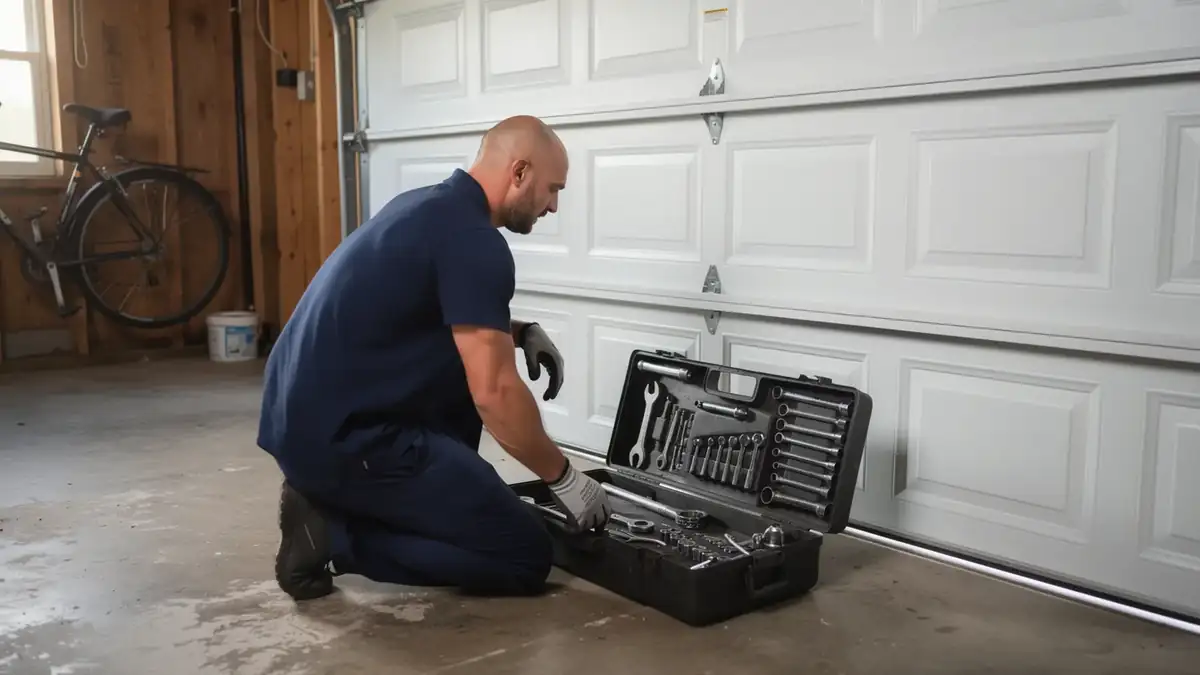
A technician kneels on a concrete floor, looking into an open toolbox in front of a white garage door.

What Is Going On

  1. When we pull up to a house in this service area

    The first thing we're doing is matching what's on the door to what year the house actually went up. Most of the stock here dates from 1947 to 1987, with the median landing around 1964, and that one number tells us more than a homeowner's description of the noise ever will. A door from that era was built to a bracket spacing and spring pattern that most parts suppliers stopped stocking decades ago. The service call starts with us opening the panel and tracing the hardware back to its generation, not just tightening what's loose.

  2. Across the 26 named areas we work in, the dominant stock is 1960s-70s construction

    Which means a huge share of calls involve the same handful of failure points: the original torsion drum, a one-piece door hinge pattern, or an opener bracket that was never designed for a modern belt-drive head. A call here isn't a generic inspection. It's us figuring out whether we're fixing a 1964 door or replacing it with something that fits a 1964 frame.

  3. We check the track alignment, the spring tension, the cable condition, and the opener's force settings, in that order

    Because on houses this age the order matters. Fix the spring before you check the track and you've wasted the spring.

What the Weather Here Does to It

Santa Clara sits in a mild temperate band, which changes what actually wears a door out compared to places with hard winters. There's no freeze-thaw cycle cracking spring coils, no snow load stressing the header, and no road salt eating the hardware. That's the good news, and it's real.

What it means instead is that failure here comes almost entirely from cycle count and age, not weather shock. A spring on a 1960s house fails because it's been wound and unwound for sixty years, not because it froze overnight. Rollers dry out and crack from steady UV and heat rather than splitting from cold. Lubricant breaks down slower here than in a harsh climate, which is why a lot of homeowners skip maintenance entirely and then are surprised when a cable finally lets go.

That also means a service call in this climate band spends less time on weatherproofing and more time on simple wear diagnosis: how many cycles has this spring seen, how loose has the track gotten from thermal expansion over the decades, and whether the opener's original gears have just worn down from use. We're not chasing storm damage. We're chasing age.

When Waiting Is Fine

Not every noise is a call-now situation, and we'll tell you that on the phone instead of booking a truck roll you don't need. A door that's slightly noisy but closes flush, holds its balance, and doesn't drift on the track can usually wait for a scheduled visit rather than an emergency one, especially in a climate like this where moisture isn't going to turn a small problem into a big one overnight.

If your house falls in that 1960s-70s stock that makes up most of this service area, a little stiffness in the opener chain or a dry-sounding roller is common and rarely urgent. We'd rather schedule that for a normal weekday slot than treat it like a spring that's already cracked.

What can't wait: a spring with a visible gap in the coil, a cable that's frayed or has popped a strand, or a door that's dropped unevenly on one side. Those get worse fast, and on an older torsion setup, a failed spring under tension is a genuine safety risk, not just an inconvenience.

Where People Go Wrong

  1. The most common mistake we see on houses in this service area is treating a 1960s or 1970s door system like it's interchangeable with modern parts

    It isn't. Someone replaces a single roller or a cable with a generic hardware-store part that doesn't match the original bracket spacing, and six months later something else fails because the mismatch put uneven load on the rest of the system.

  2. The second mistake is ignoring the opener separately from the door

    On a house built around the median year here, 1964, the door hardware and the opener are often from completely different decades because the opener got replaced once already. A service call has to treat them as two systems that happen to share a track, not one unit.

  3. Here's the honest limit

    If the original torsion drum or track on a door this old is bent or badly worn, we're not going to hunt down an exact vintage replacement part that may not exist anymore. At that point, replacing the hardware with a correctly sized modern kit is the straightforward answer, even though it's not a like-for-like swap. Pretending otherwise just delays the real fix.
How it works

From “it’s stuck” to “it’s fixed”

A quick, honest process - no guesswork and no surprises.

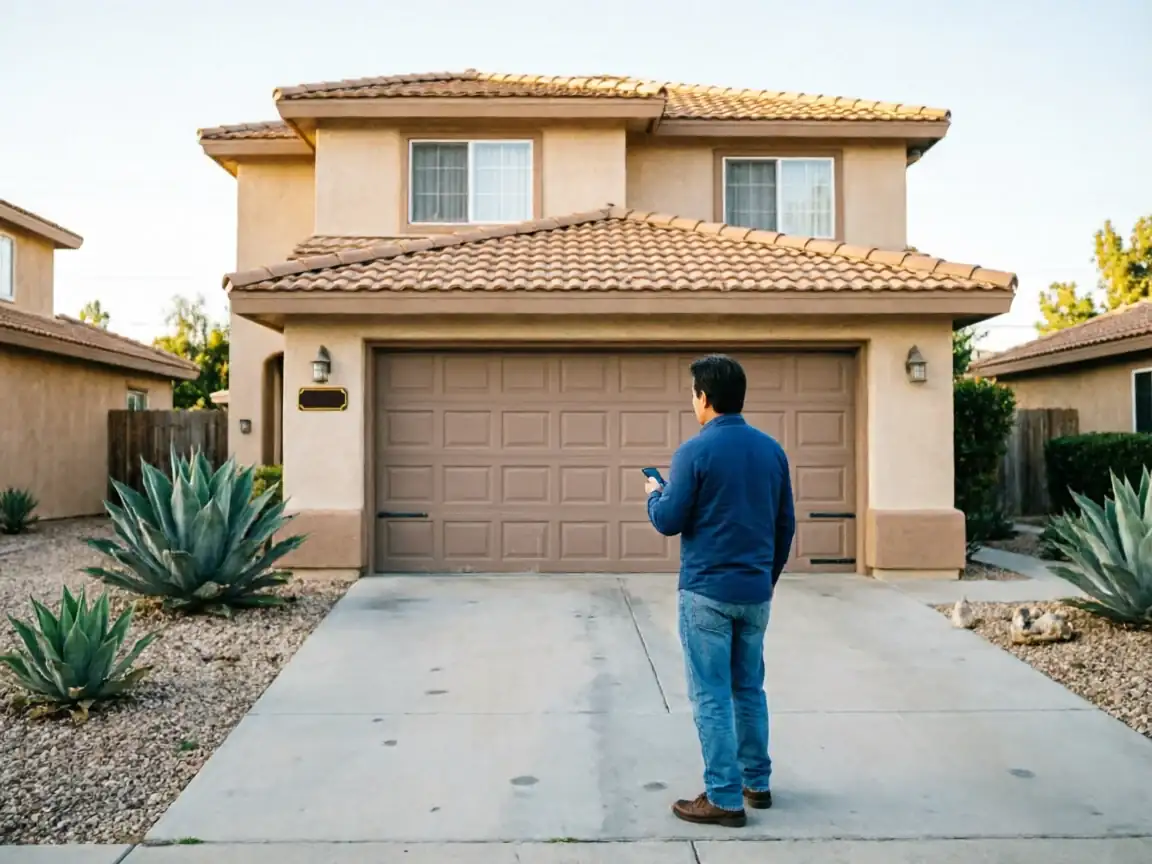
  1. A man stands in a driveway looking at his phone in front of a house with a brown garage door.
    1

    Tell us what’s wrong

    Describe the symptom - won’t open, loud bang, opener runs but the door won’t move.

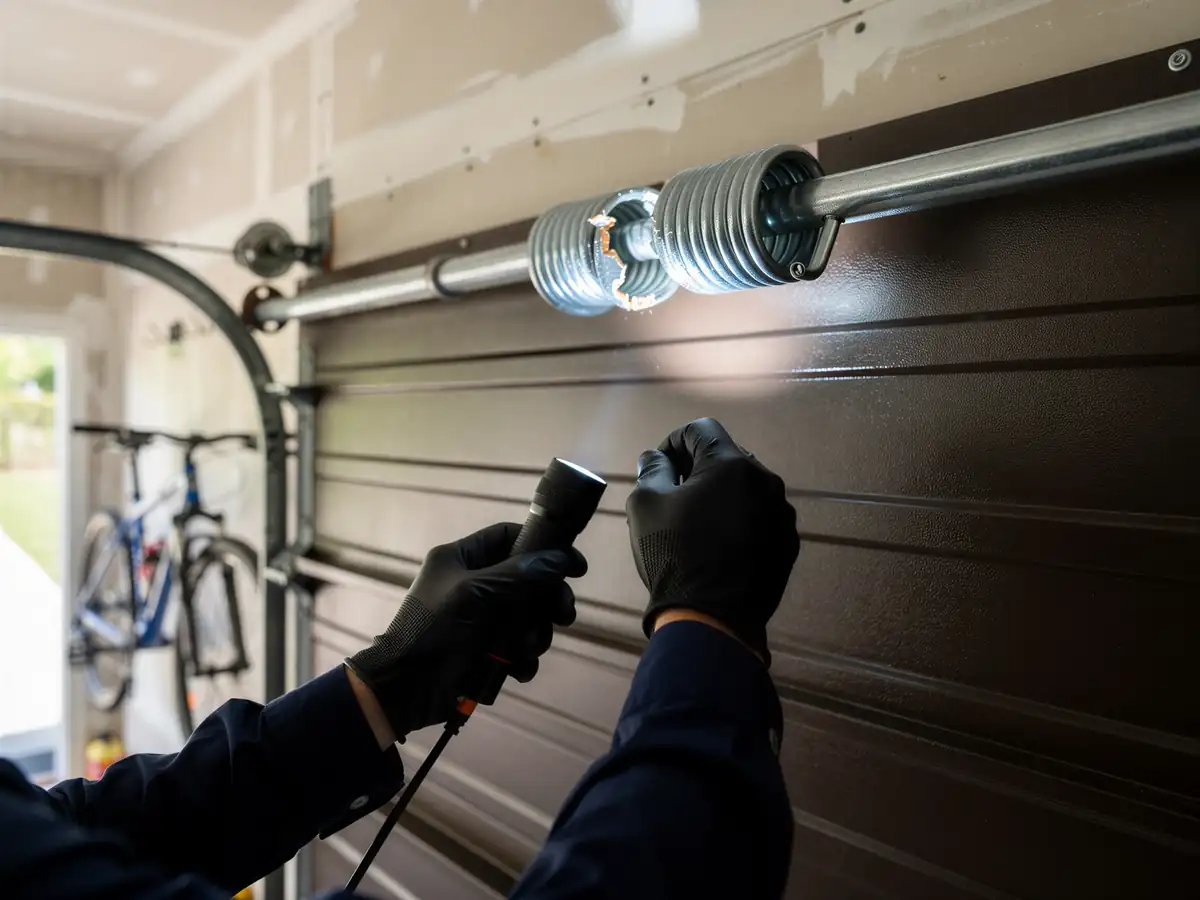
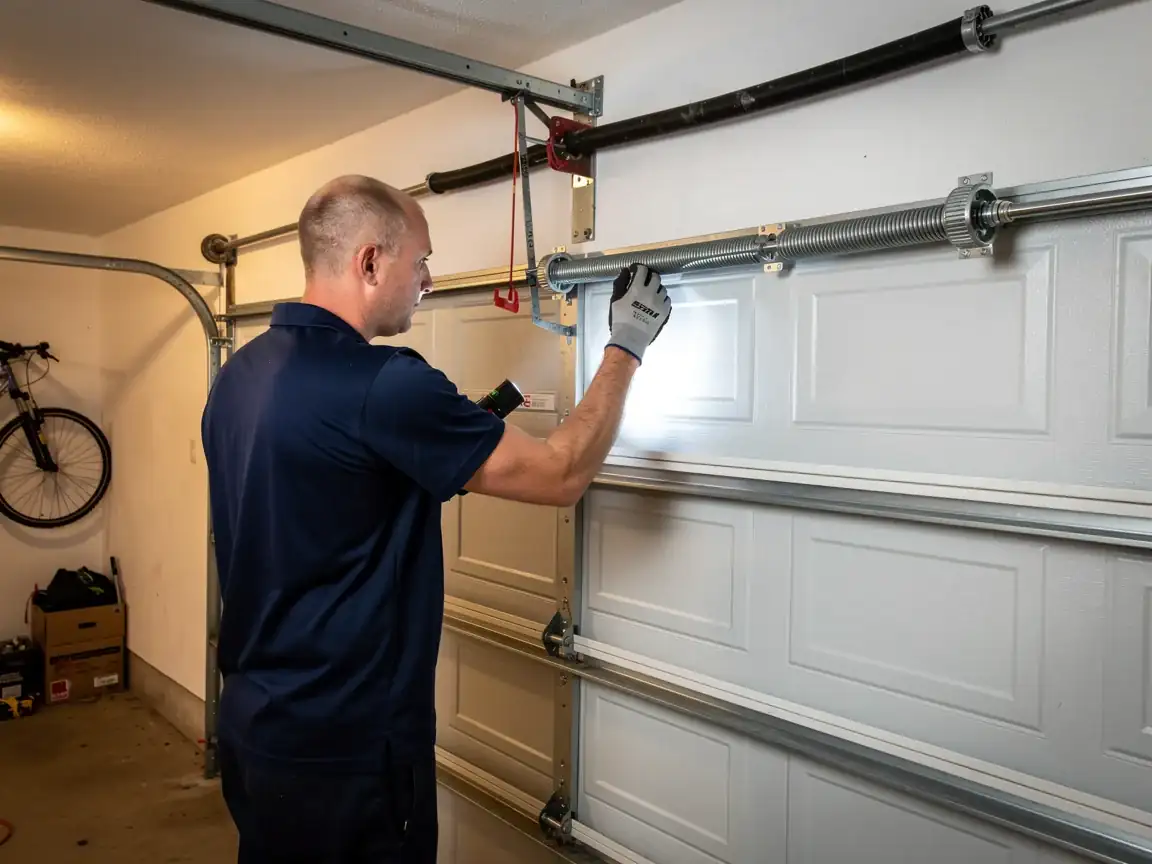
  2. A technician shines a flashlight on a garage door torsion spring.
    2

    On-site diagnosis

    A technician tests the door under power and by hand and finds what actually failed.

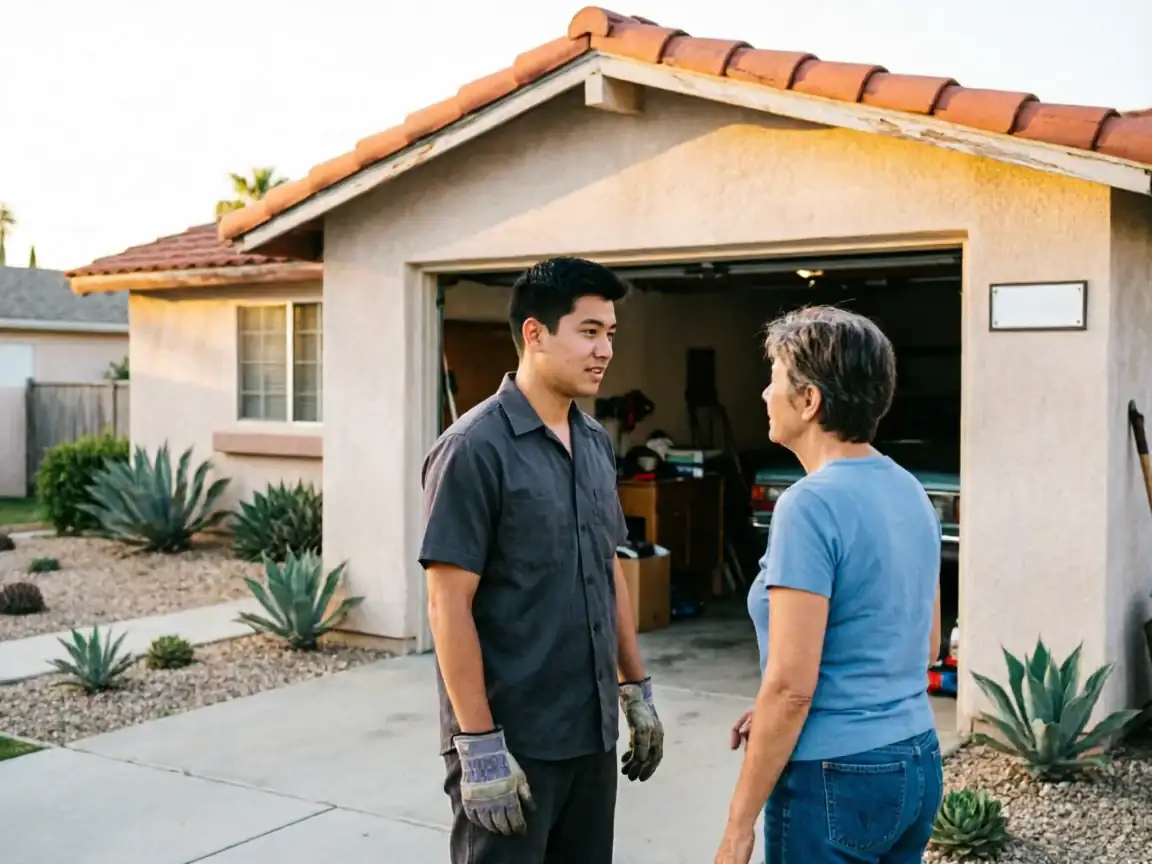
  3. A technician talks to a woman in front of a garage with an open door.
    3

    Clear, up-front plan

    You get the fix that’s needed and what drives the cost - before any work starts.

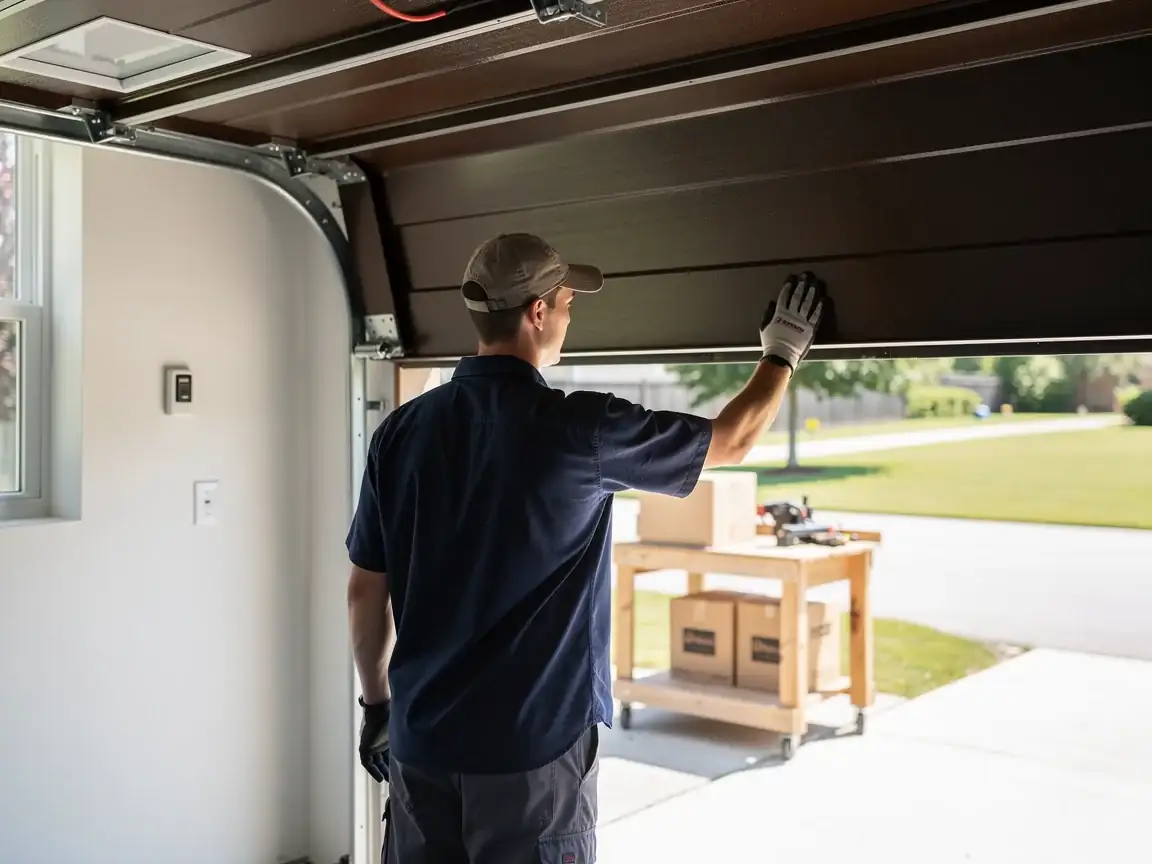
  4. A technician in a cap and gloves adjusts a brown garage door.
    4

    Repaired & tested

    The repair is done, the door is set true and tested, and the work area left clean.

Not sure which repair your door needs in Santa Clara, CA? Describe what it’s doing - every job starts with a diagnosis.

How we work

What to expect

Diagnosis first

Every visit starts by finding what actually failed - not a pre-written parts list.

The right part for the door

Springs and openers matched to the door’s weight and age, so the fix holds up.

Straight answers

When a repair makes more sense than a replacement - or the reverse - you hear it plainly.

Clean, careful work

Tension released safely, hardware set true, the door tested under power before we leave.

What we do

Garage Door Services

Repair and installation work for Santa Clara homes and businesses.

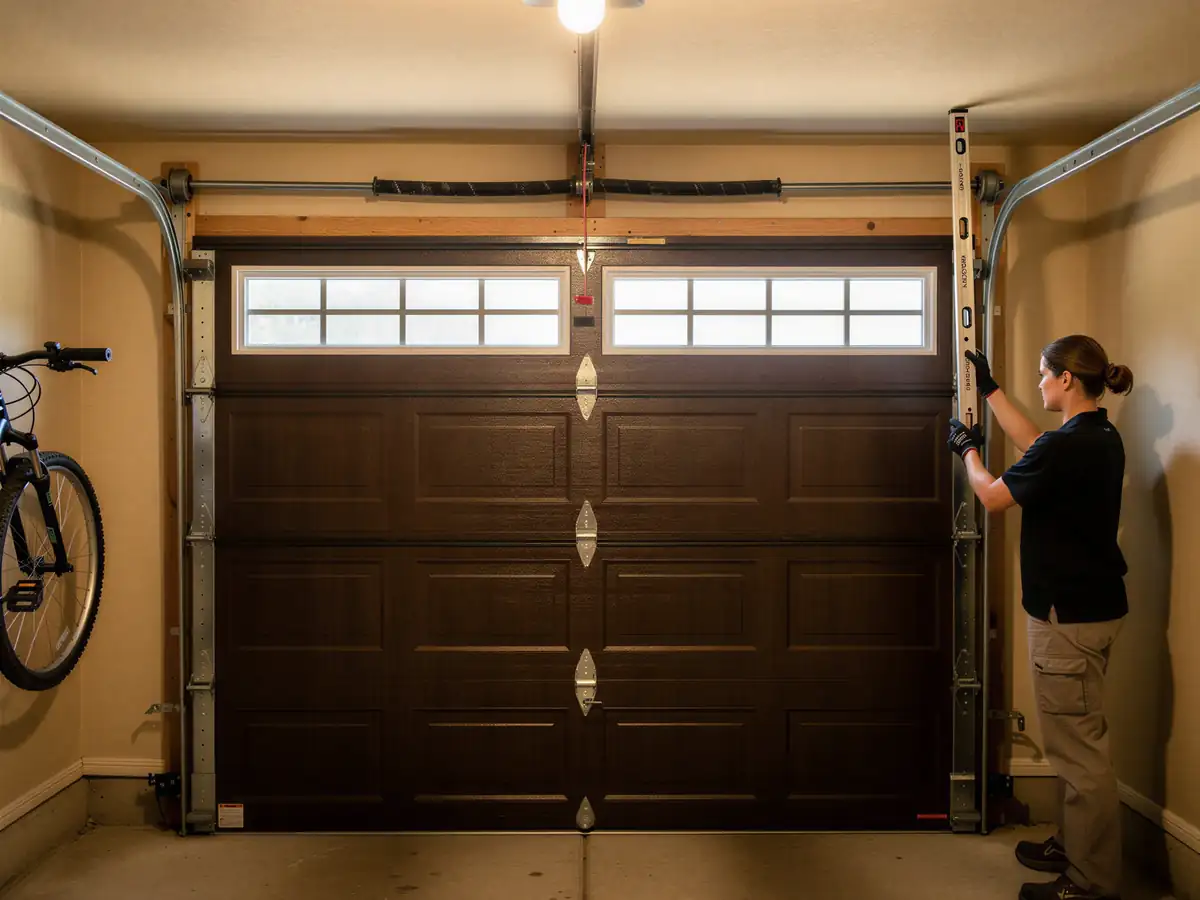
A technician uses a level to adjust the brown garage door track.

Garage Door Repair

Garage door repair for Santa Clara homes built 1947-1987, where original torsion hardware and mild-climate wear are the common failure points. Call for a diagnosis.

Learn more
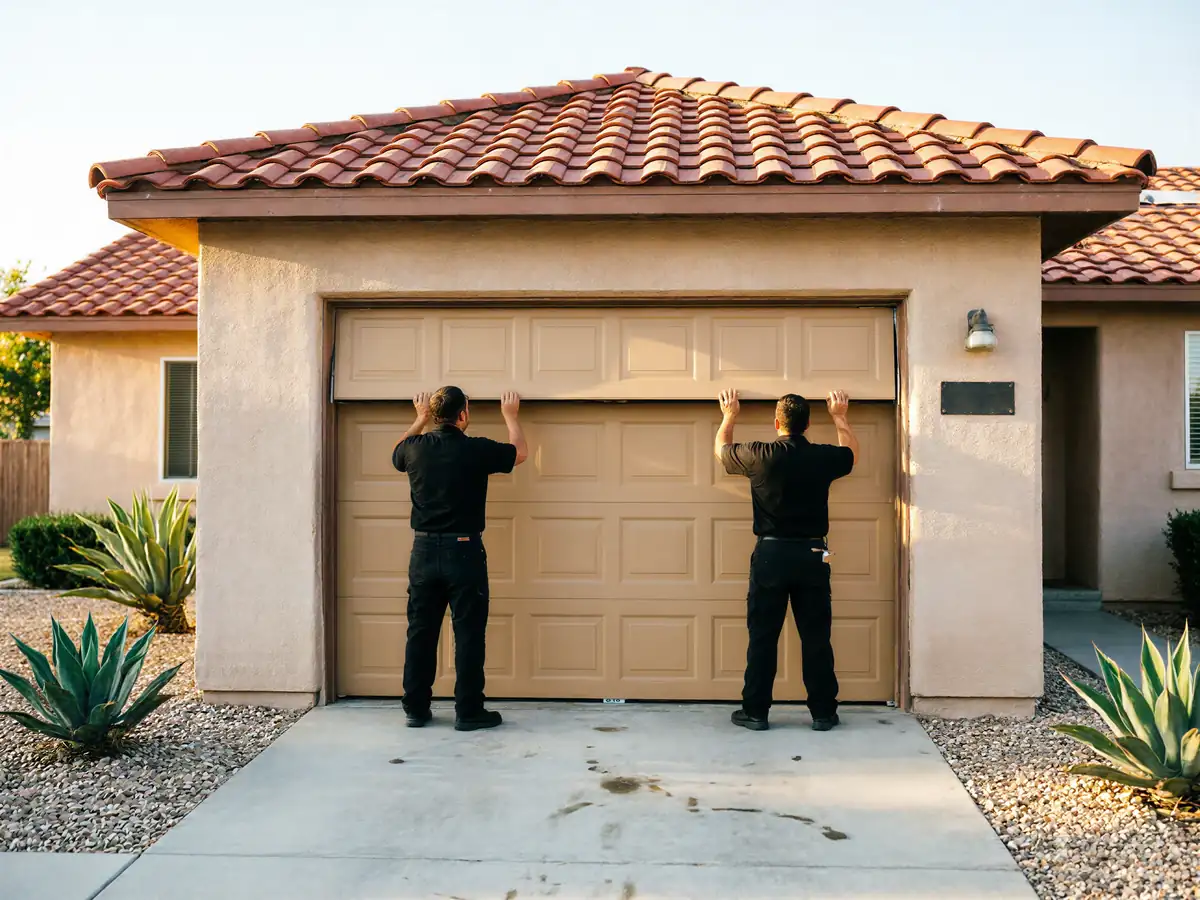
Two technicians are working on a tan garage door on a house.

Garage Door Installation

New garage door installation for Santa Clara homes built 1947-1987, where original hardware and non-insulated panels are the norm, not the exception.

Learn more
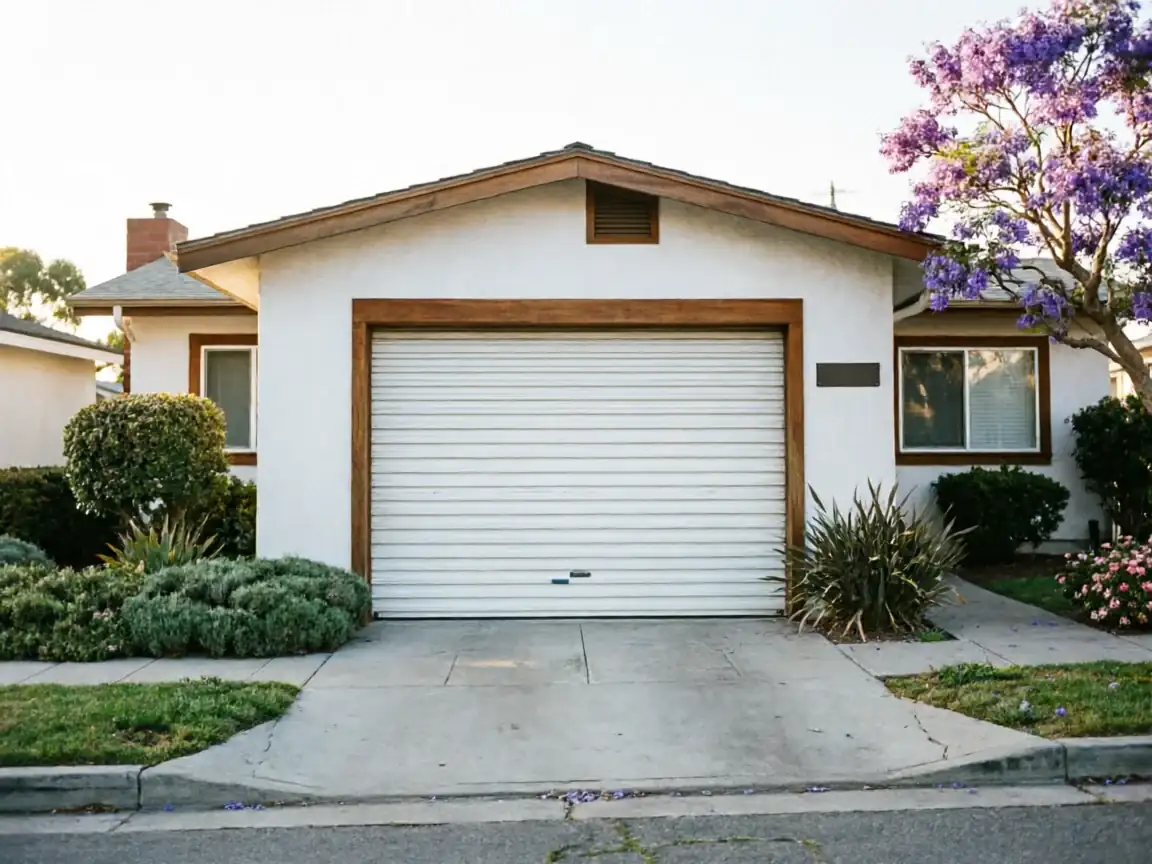
The white house has a white garage door, a driveway, and landscaping.

Garage Door Service

Service for 1960s-70s Santa Clara garage doors: worn torsion springs, original hardware, and track wear from decades of daily use. Fast, honest repair calls.

Learn more
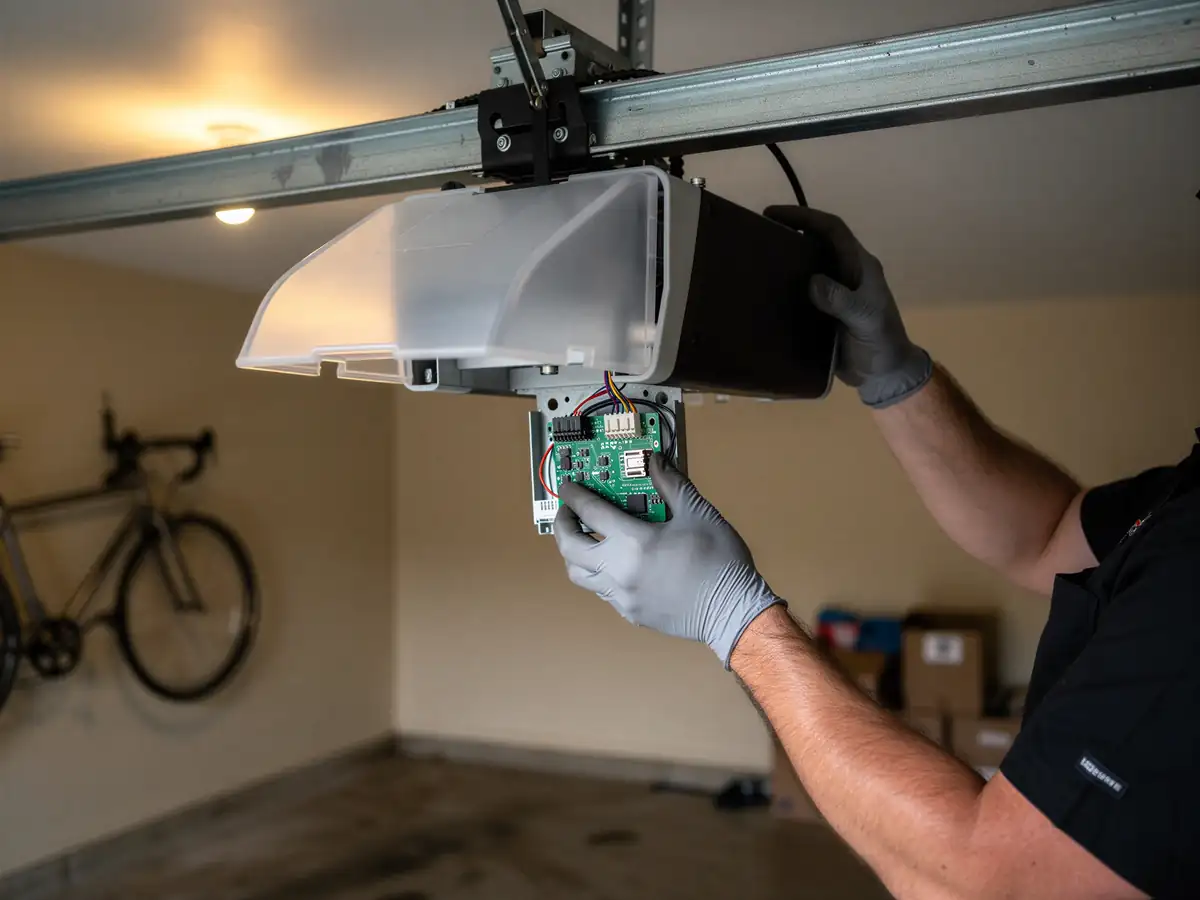
A technician wearing gloves works on the circuit board of a garage door opener.

Opener Repair

Opener repair for Santa Clara homes built mostly in the 1960s and 70s, where original wiring and worn gears are the usual culprits. Same service area, real diagnosis.

Learn more
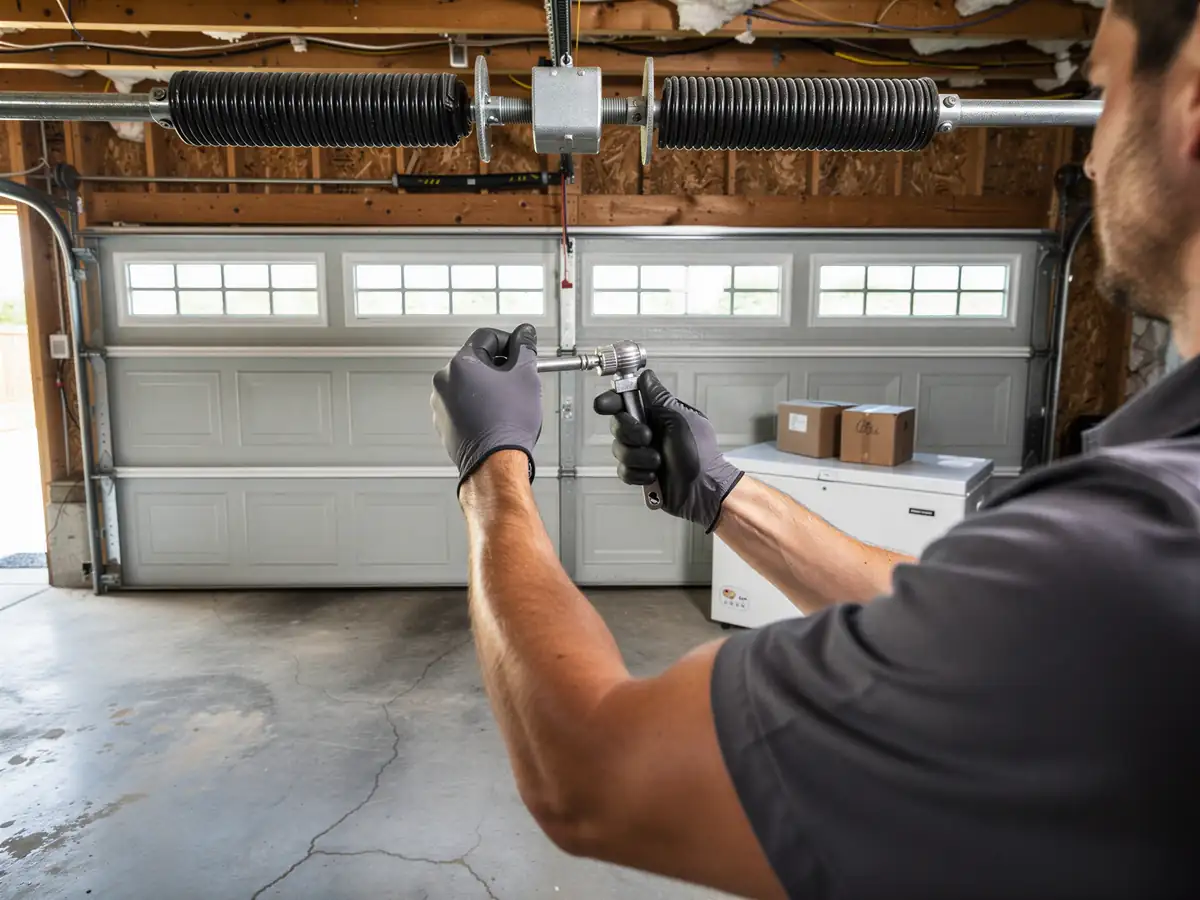
A technician in black gloves holds a wrench near a garage door torsion spring.

Spring Repair

Broken torsion spring on a Santa Clara garage door? We fix the original 1960s-era hardware still common across this part of the South Bay. Same-area service.

Learn more
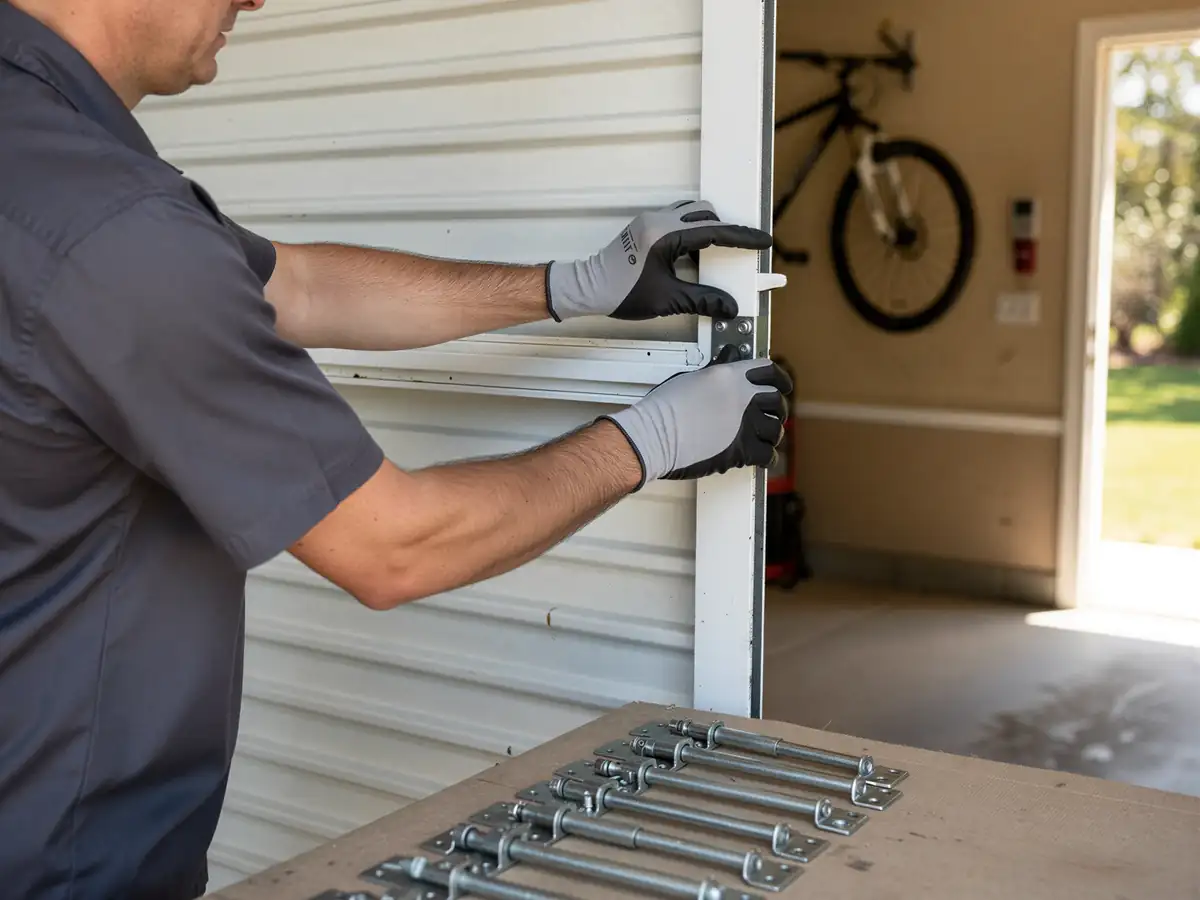
A technician in gloves installs a white garage door panel.

Panel Replacement

Dented, cracked, or rusted garage door panels on a 1960s or 70s Santa Clara house? We match panels to older steel and wood-composite doors across the valley.

Learn more
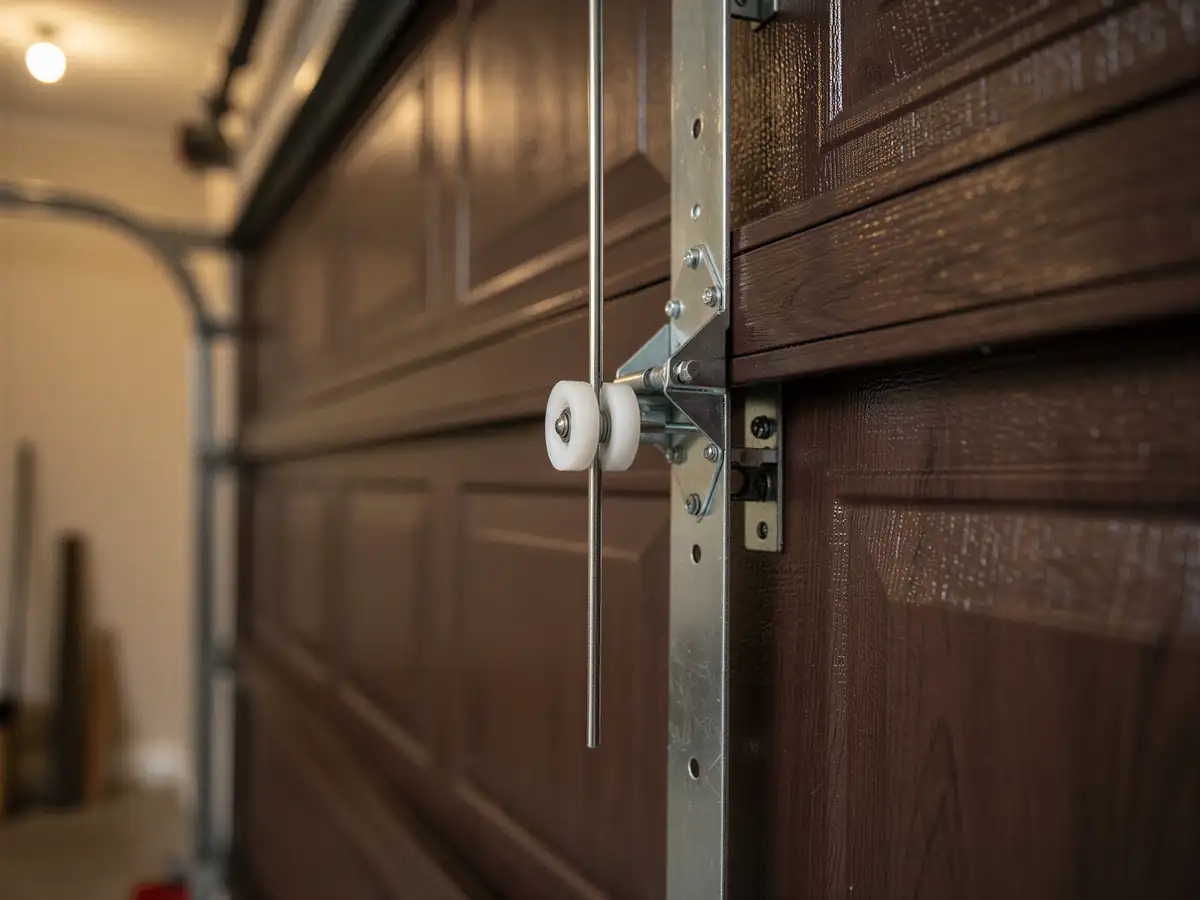
The brown garage door is open, showing a roller and track.

Roller Replacement

Worn rollers on Santa Clara's 1960s-70s garage doors cause grinding and sticking tracks. Santa Clara Garage Door Pros replaces rollers on original hardware across the area.

Learn more
A technician shines a flashlight on a broken garage door torsion spring.

Emergency Garage Door Repair

Santa Clara homes built mostly between 1947 and 1987 carry original hardware that fails in predictable ways. Here's what breaks, what it costs to fix, and how fast we get there.

Learn more
Questions

Frequently asked

Straight answers about garage door repair in Santa Clara. Still unsure? Ask us directly.

How do you know what parts my door needs without seeing it first?

We don't guess over the phone. Because most houses in this area were built between 1947 and 1987, we ask the build year as a starting point, but the actual bracket spacing, spring size, and opener generation only get confirmed once we've opened the panel on site.

Does Santa Clara's climate affect how often I need service?

Yes, but less dramatically than colder regions. The mild temperate band here means failures come from cycle count and age rather than frost or storm damage, so maintenance intervals are more about how many times a day the door runs than the season.

Is it normal for my opener and door hardware to be different ages?

On houses from this era, very common. A door built when the median home in this area went up, around 1964, often has an opener that's been swapped once or twice since. We check both separately rather than assuming one tells you about the other.

Can you match my original 1960s hardware exactly?

Sometimes, but not always. If a torsion drum or bracket from that era is too worn or bent, we won't chase down an exact vintage match that may no longer be manufactured. A correctly sized modern replacement is usually the honest answer at that point.

Ready to get your garage door sorted?

Tell us what it’s doing and where you are in Santa Clara - we’ll take it from there.

Request a QuoteCall