Serving Santa Clara, CA & nearby
(408) 786-3314
Santa Clara, CA

What an Older Garage Door Is Actually Worth Fixing

Santa Clara homes mostly date to 1960-1977. See when a worn garage door from that era is worth repairing versus replacing, based on this area's housing stock and mild climate.

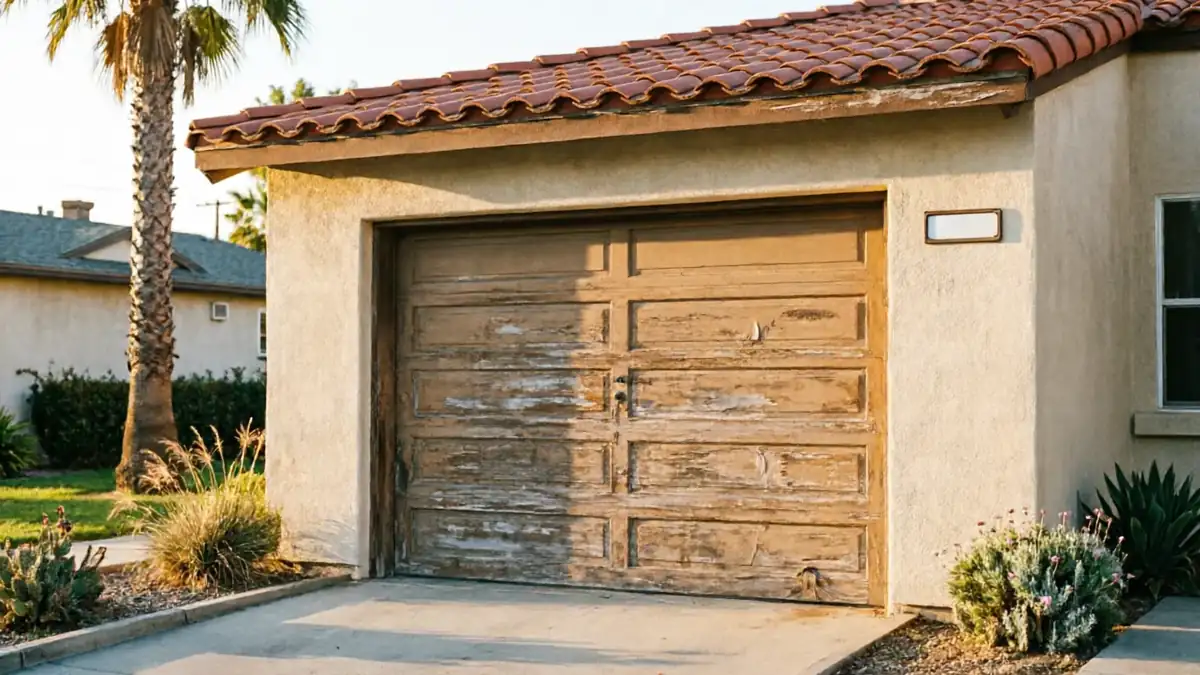
The garage door is weathered and peeling, with a stucco house and red tile roof.

What Is Going On

  1. Most of the housing stock in this service area went up between 1947 and 1987

    With the median landing right around 1964. That means a huge share of the doors we get called on are either original to the house or a straight swap-in replacement installed sometime in the 1970s or 80s on the same hardware. Across the 26 named areas we cover - from a few miles southwest to up toward the northeast - the pattern repeats: a steel or wood sectional door, torsion or extension spring from that build era, and tracks that were sized for a lighter panel than what's sometimes been swapped in since.

  2. The question we hear is simple: is this thing worth fixing, or should it just come out

    The honest answer depends on what's actually failed. A broken spring, a bent track section, worn rollers, or a bad opener motor on a door from the 1960s-70s cohort is almost always a repair, not a replacement - the panel itself usually outlasts the moving parts by decades if the house has been maintained at all. What changes the math is rot in the bottom panel, rust-through on the skin, or a frame that's racked from a car hitting it. At that point you're not fixing a door, you're propping one up.

What the Weather Here Does to It

This area sits in a mild temperate band - no hard freezes cracking wood panels, no heavy sustained humidity swelling seams the way you'd see in a different climate. That's good news for a door built in the 1960s or 70s: the steel doesn't pit from salt air, and the wood doors from that era that are still around usually failed from UV and age on the paint, not from moisture getting into the core. It's a big part of why so much of this pre-1987 stock is still serviceable at all.

What the mild climate doesn't protect against is just time on moving parts. Springs lose tension on a predictable cycle regardless of weather - torsion springs installed when a house was built in the 1960s are well past any reasonable service life by now, full stop. Rollers wear from cycles, not rain. So don't read 'mild climate' as 'nothing to worry about.' It just means when we tell you a 1960s door is worth fixing, we're not fighting rust or warp on top of the age - we're usually just replacing springs, cables, and rollers on a panel that's structurally fine.

When Waiting Is Fine

If your door is from that 1947-1987 cohort and the panel is straight, not rusted through, and not sagging at the corners, a noisy roller or a slightly off track alignment can wait. It's not going to get dramatically worse overnight in this climate - no freeze-thaw cycle is going to crack a panel while you put off the call for a few weeks.

Same goes for cosmetic fading on steel doors from that era - the paint goes chalky long before the steel underneath gives out. That's a repaint-or-live-with-it decision, not a repair-or-replace one. Where we'd tell you not to wait: a spring that's already snapped (the other one is usually close behind, same age, same wear), or cables starting to fray, because those are the parts that can let a panel drop fast and that's a safety call, not a scheduling one.

Where People Go Wrong

  1. The mistake we see most with houses from the 1960s and 70s stock

    Someone replaces a broken spring or a bad opener and calls it done, without checking whether the track and hinges are still sized right for the panel. On a lot of homes in this area the door itself has never been swapped since the house was built, so the hardware has decades of wear nobody's looked at closely. Fixing one part on an otherwise original setup can mask bigger wear elsewhere.

  2. The other common error, especially given how much of this service area sits in a comfortable income bracket

    Is jumping straight to full replacement when a $200-300 repair would've gotten another decade out of a door that's otherwise sound. We'd rather tell you a repair isn't worth it than talk you into one - but we'd also rather you ask before you replace a door that just needed springs and rollers. One real limitation: if the panel itself is rotted, cracked clean through, or the track is bent beyond straightening, that's a replacement conversation, and we'll say so plainly instead of billing you for a patch that won't hold.
How it works

From “it’s stuck” to “it’s fixed”

A quick, honest process - no guesswork and no surprises.

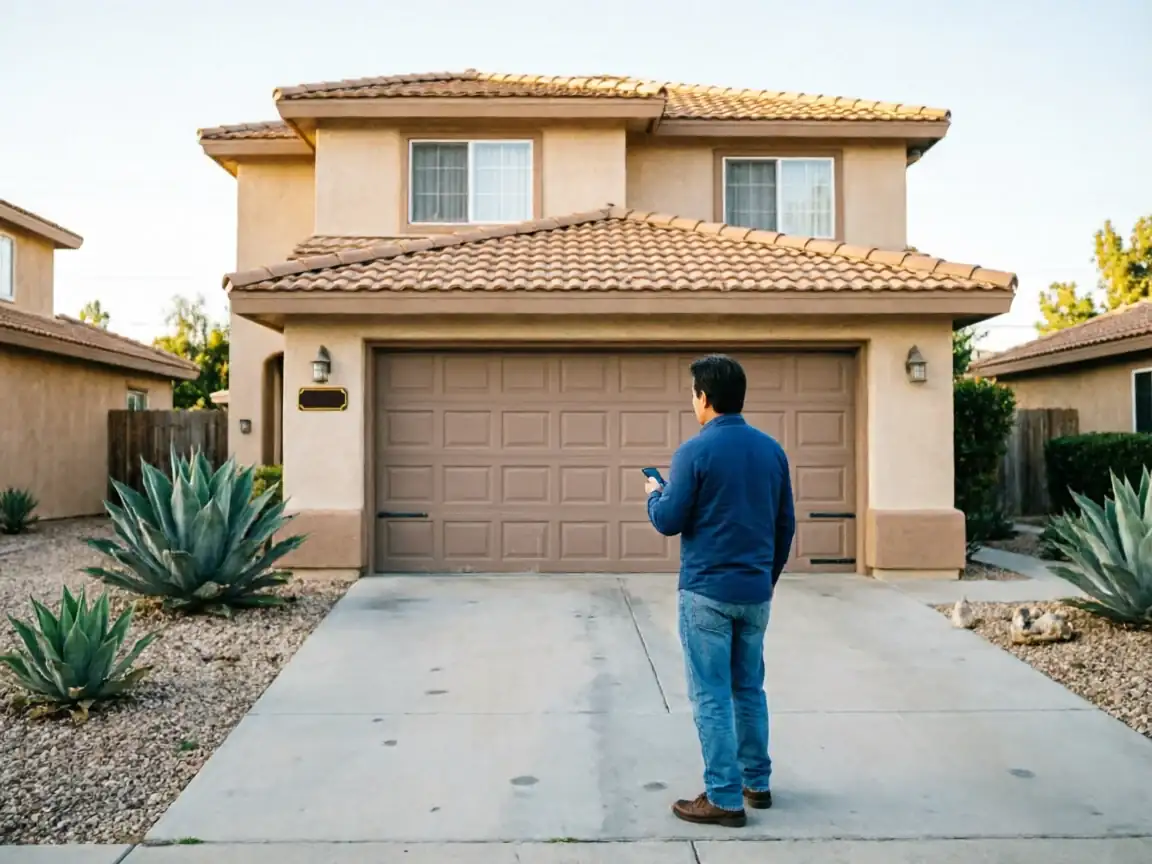
  1. A man stands in a driveway looking at his phone in front of a house with a brown garage door.
    1

    Tell us what’s wrong

    Describe the symptom - won’t open, loud bang, opener runs but the door won’t move.

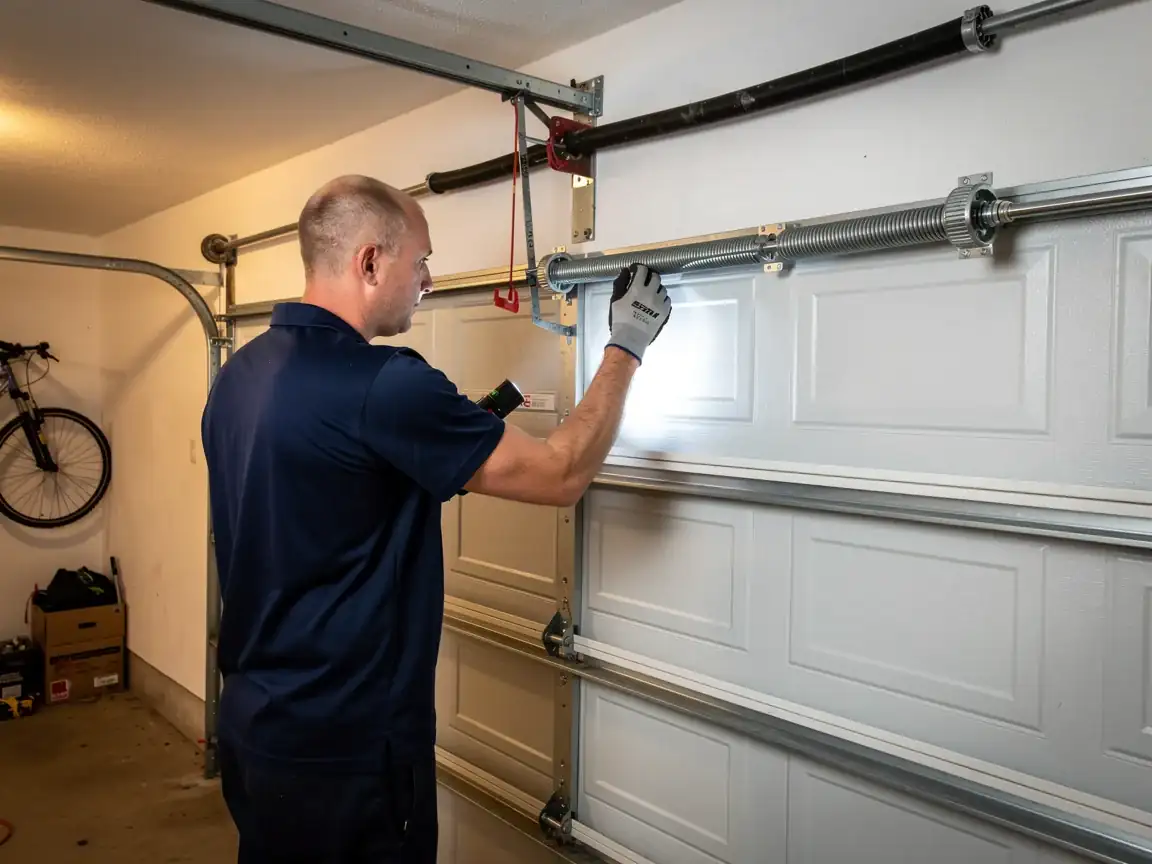
  2. A technician shines a flashlight on a garage door torsion spring.
    2

    On-site diagnosis

    A technician tests the door under power and by hand and finds what actually failed.

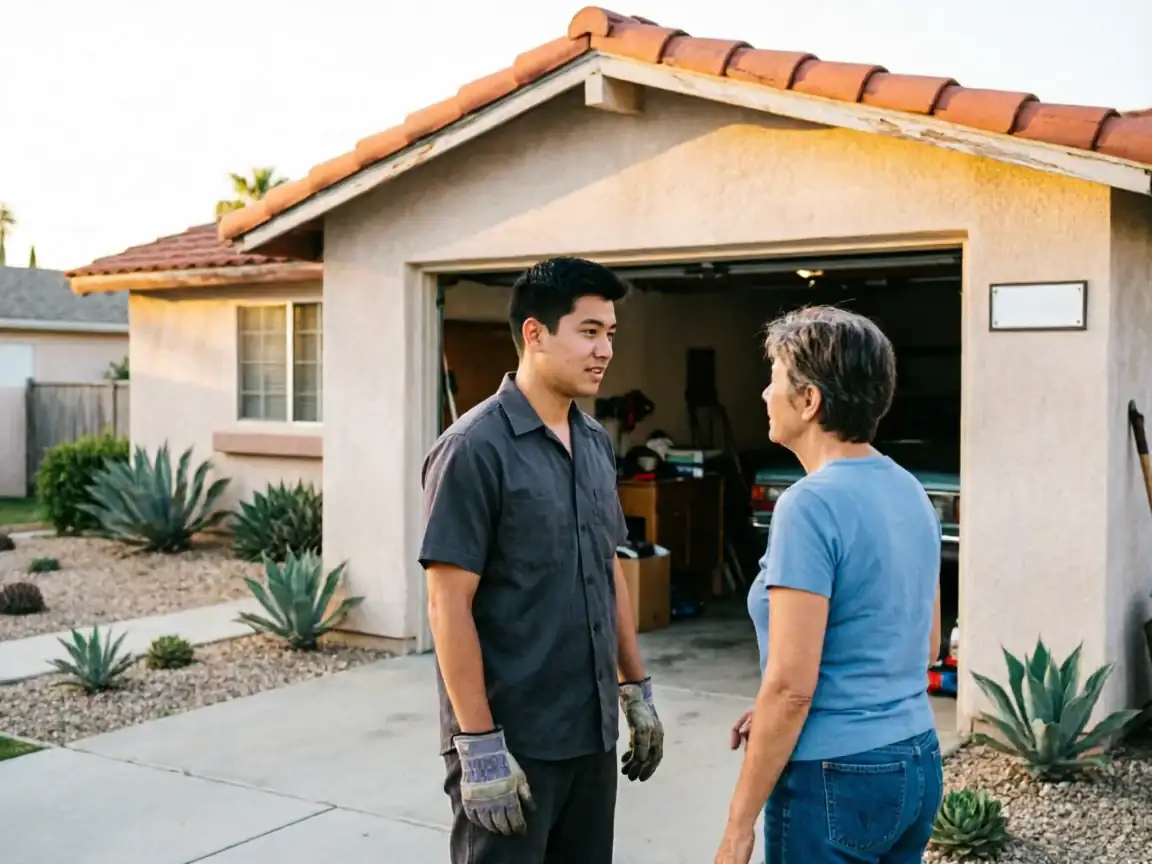
  3. A technician talks to a woman in front of a garage with an open door.
    3

    Clear, up-front plan

    You get the fix that’s needed and what drives the cost - before any work starts.

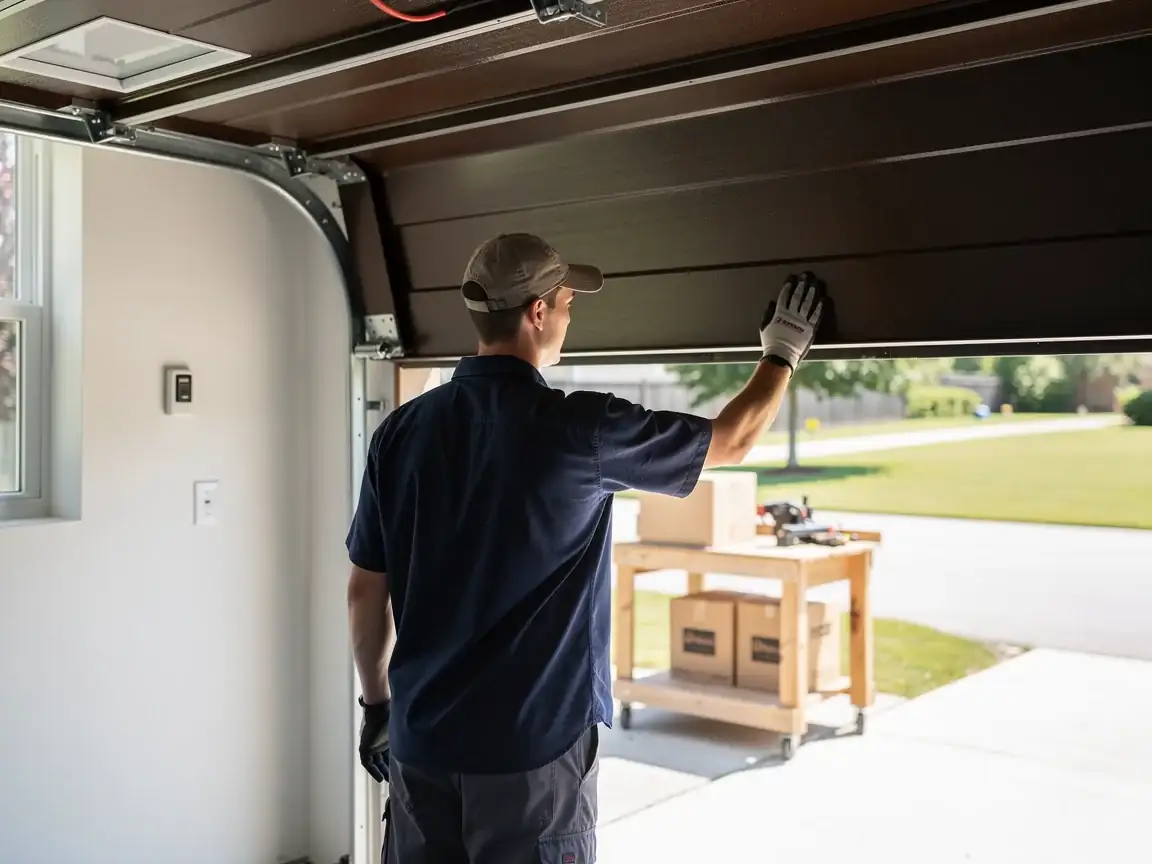
  4. A technician in a cap and gloves adjusts a brown garage door.
    4

    Repaired & tested

    The repair is done, the door is set true and tested, and the work area left clean.

Not sure which repair your door needs in Santa Clara, CA? Describe what it’s doing - every job starts with a diagnosis.

How we work

What to expect

Diagnosis first

Every visit starts by finding what actually failed - not a pre-written parts list.

The right part for the door

Springs and openers matched to the door’s weight and age, so the fix holds up.

Straight answers

When a repair makes more sense than a replacement - or the reverse - you hear it plainly.

Clean, careful work

Tension released safely, hardware set true, the door tested under power before we leave.

What we do

Garage Door Services

Repair and installation work for Santa Clara homes and businesses.

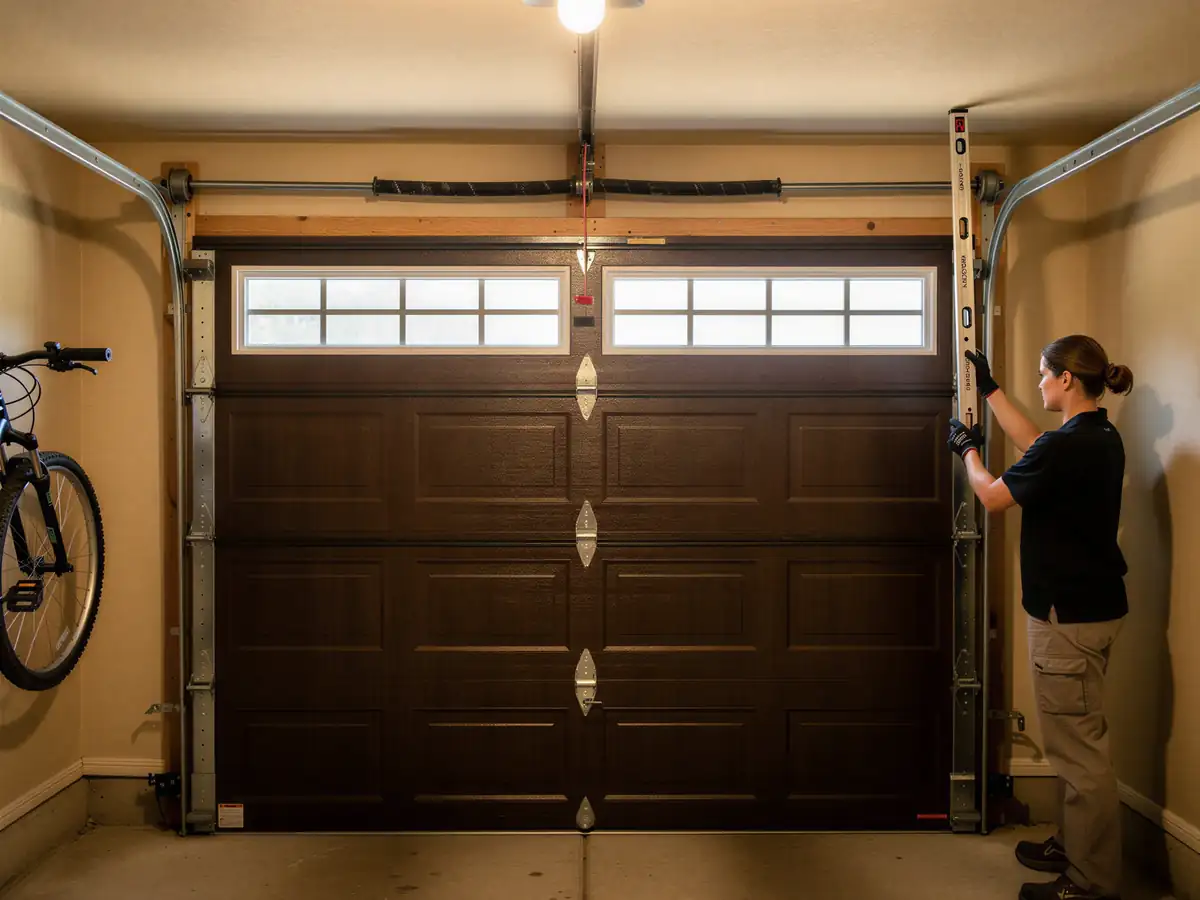
A technician uses a level to adjust the brown garage door track.

Garage Door Repair

Garage door repair for Santa Clara homes built 1947-1987, where original torsion hardware and mild-climate wear are the common failure points. Call for a diagnosis.

Learn more
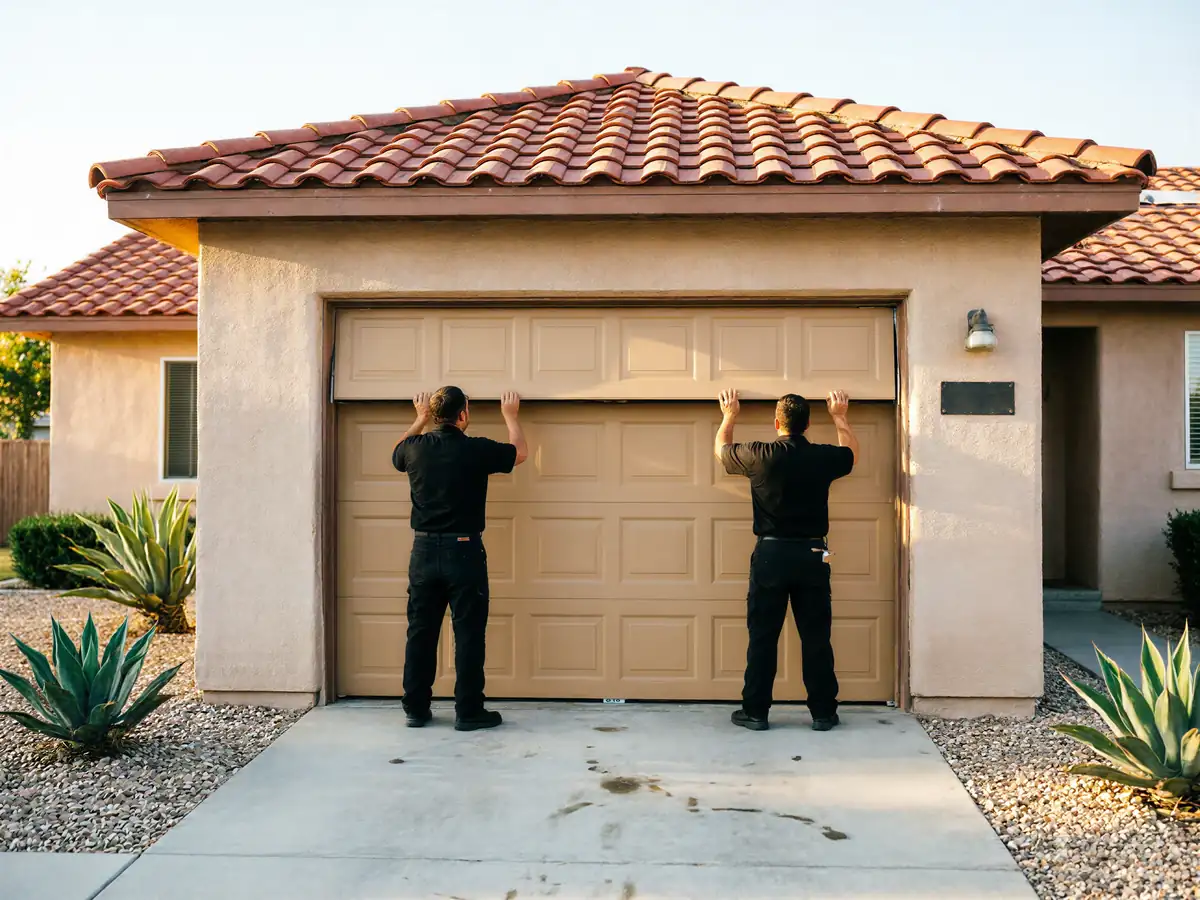
Two technicians are working on a tan garage door on a house.

Garage Door Installation

New garage door installation for Santa Clara homes built 1947-1987, where original hardware and non-insulated panels are the norm, not the exception.

Learn more
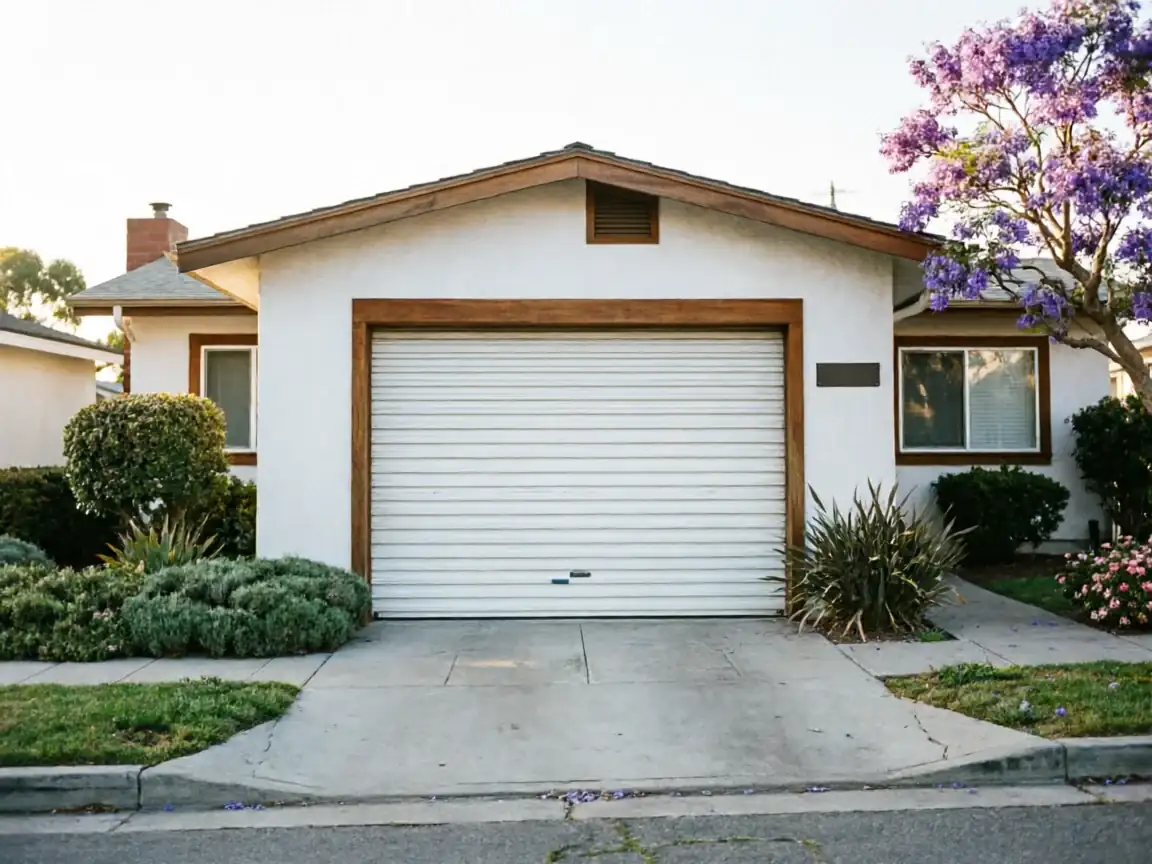
The white house has a white garage door, a driveway, and landscaping.

Garage Door Service

Service for 1960s-70s Santa Clara garage doors: worn torsion springs, original hardware, and track wear from decades of daily use. Fast, honest repair calls.

Learn more
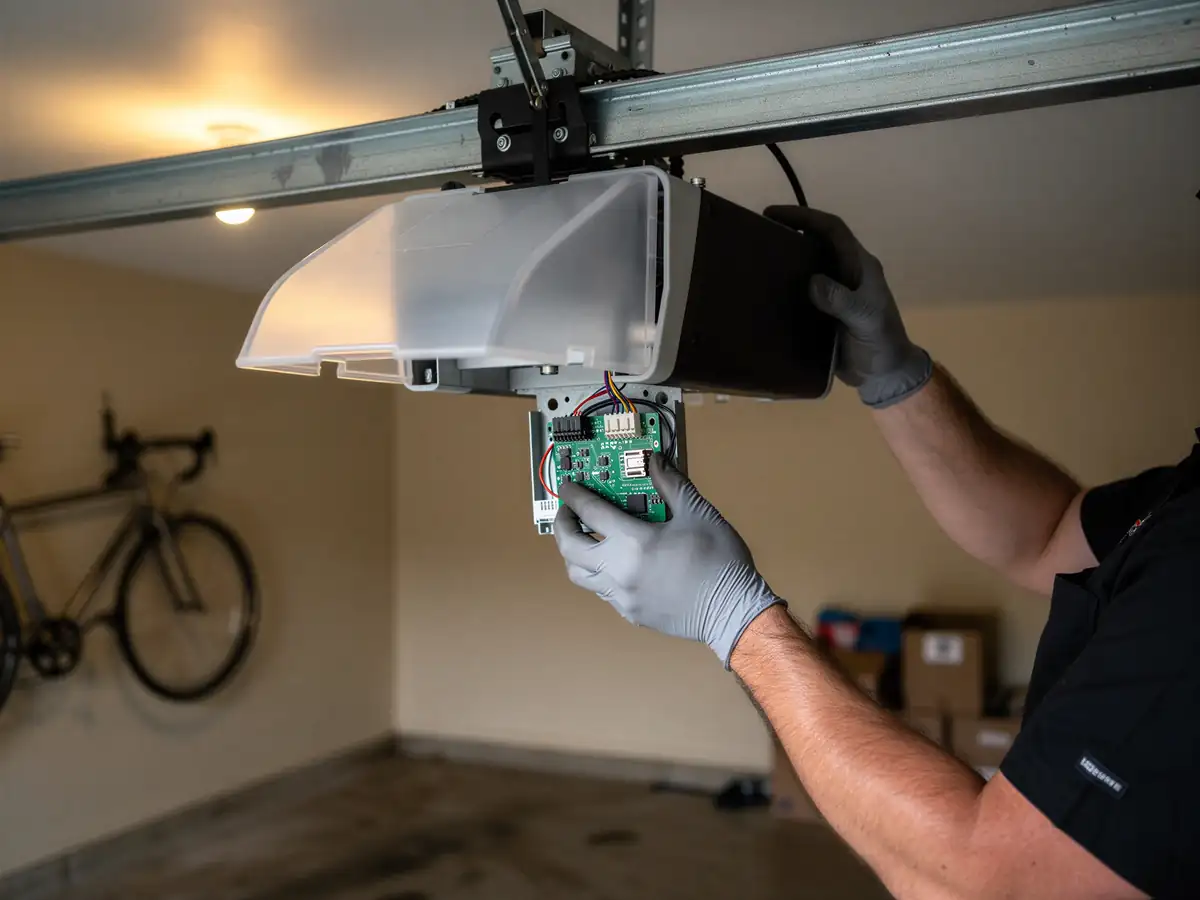
A technician wearing gloves works on the circuit board of a garage door opener.

Opener Repair

Opener repair for Santa Clara homes built mostly in the 1960s and 70s, where original wiring and worn gears are the usual culprits. Same service area, real diagnosis.

Learn more
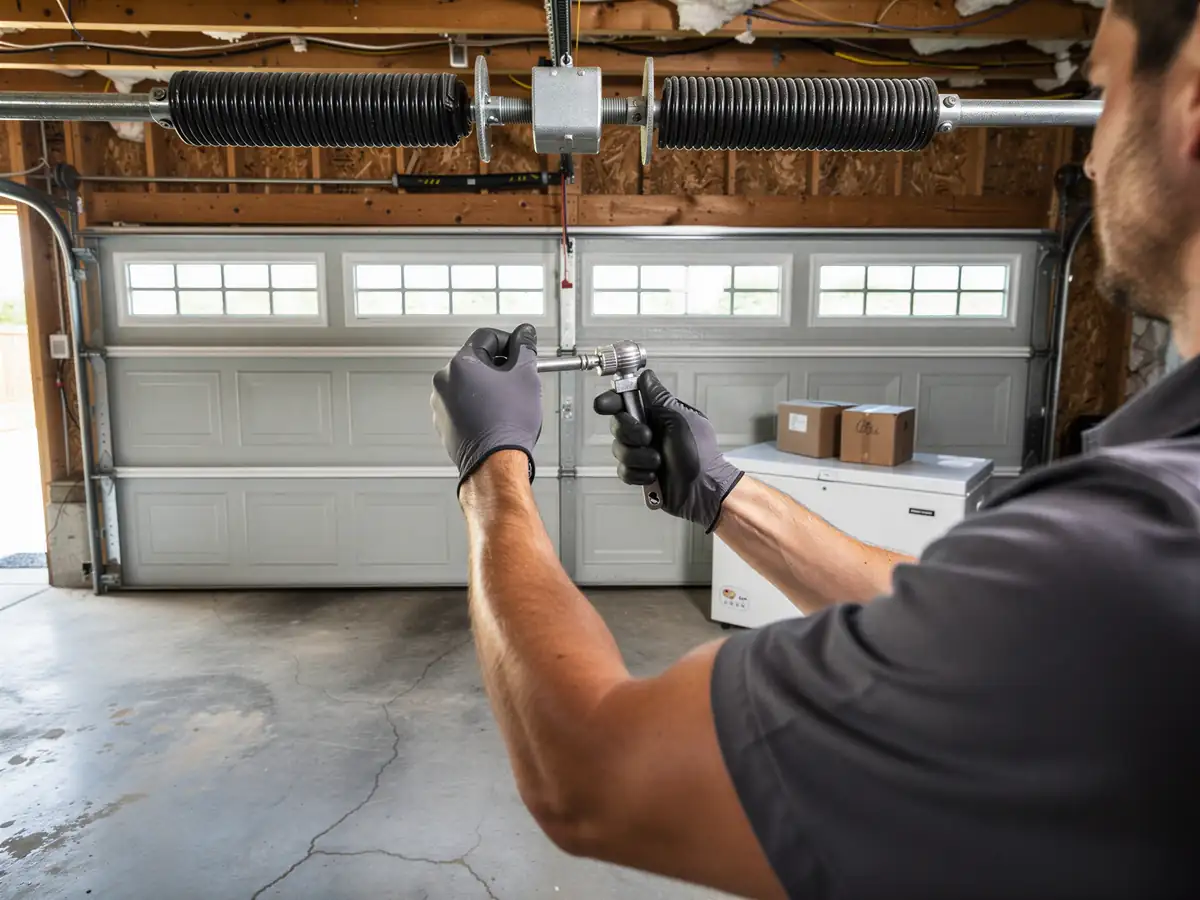
A technician in black gloves holds a wrench near a garage door torsion spring.

Spring Repair

Broken torsion spring on a Santa Clara garage door? We fix the original 1960s-era hardware still common across this part of the South Bay. Same-area service.

Learn more
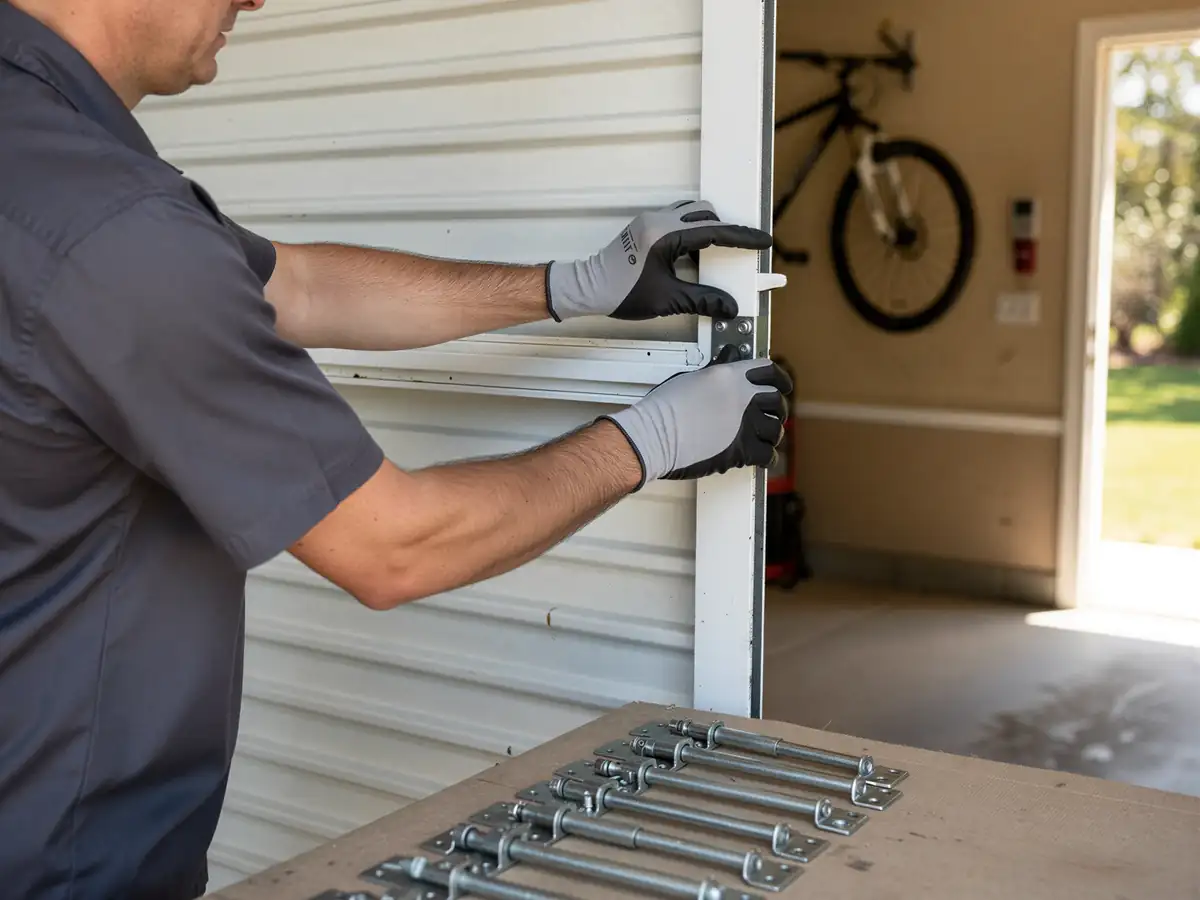
A technician in gloves installs a white garage door panel.

Panel Replacement

Dented, cracked, or rusted garage door panels on a 1960s or 70s Santa Clara house? We match panels to older steel and wood-composite doors across the valley.

Learn more
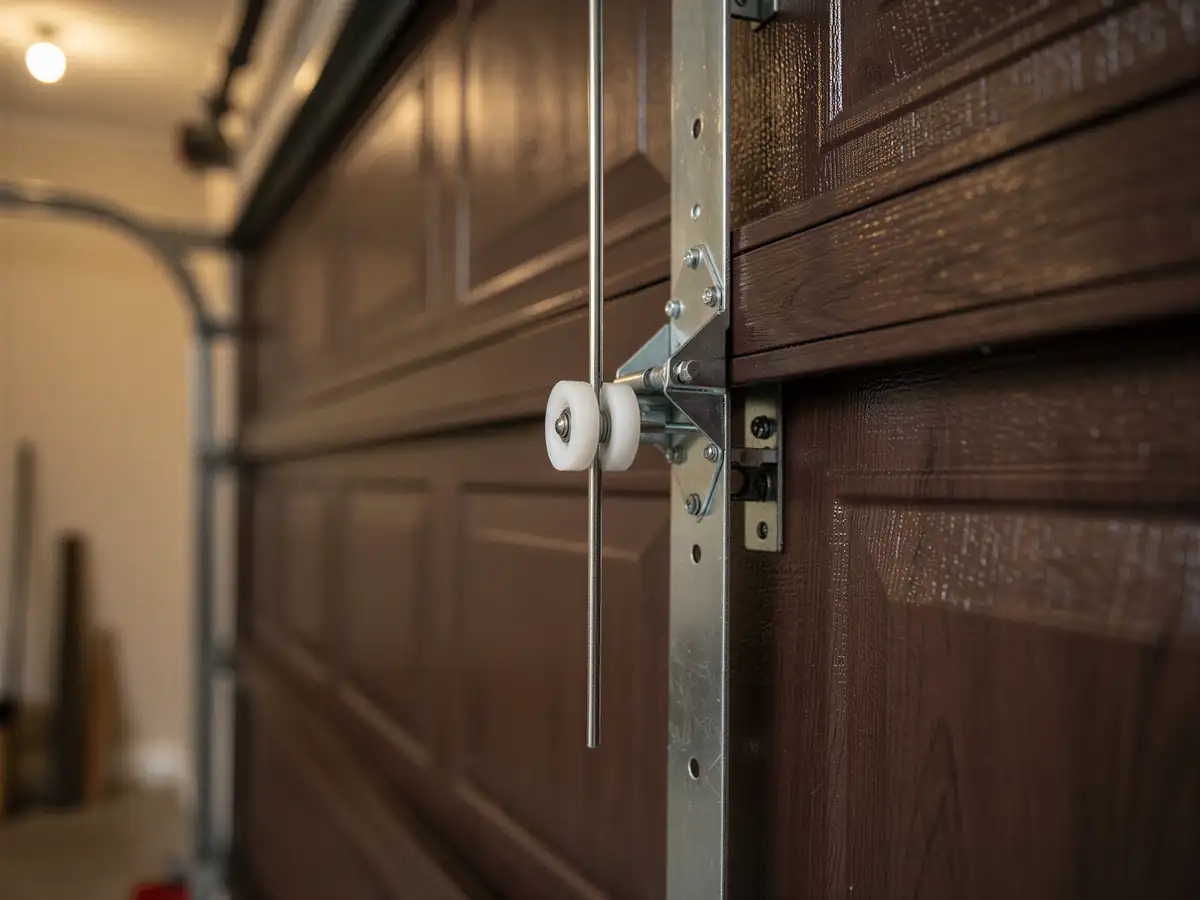
The brown garage door is open, showing a roller and track.

Roller Replacement

Worn rollers on Santa Clara's 1960s-70s garage doors cause grinding and sticking tracks. Santa Clara Garage Door Pros replaces rollers on original hardware across the area.

Learn more
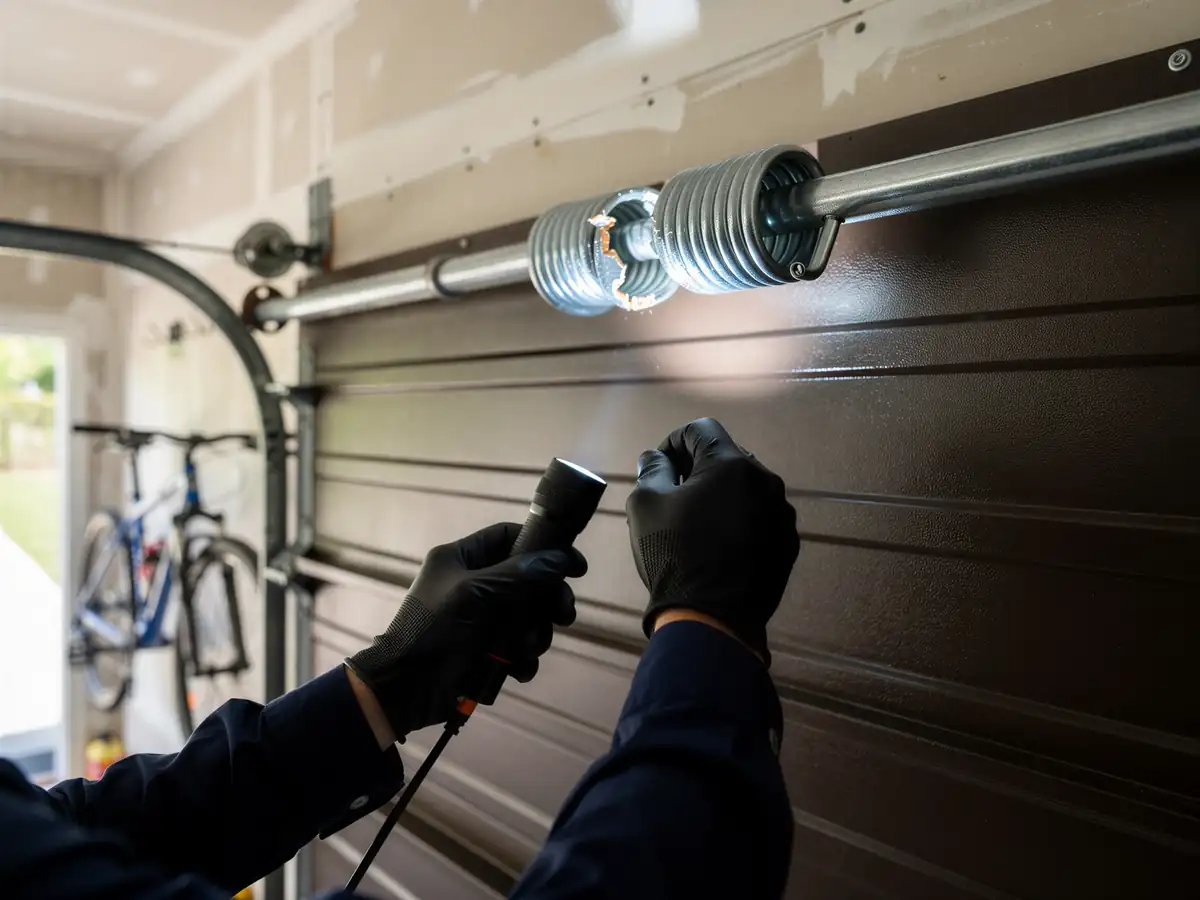
A technician shines a flashlight on a broken garage door torsion spring.

Emergency Garage Door Repair

Santa Clara homes built mostly between 1947 and 1987 carry original hardware that fails in predictable ways. Here's what breaks, what it costs to fix, and how fast we get there.

Learn more
Questions

Frequently asked

Straight answers about garage door repair in Santa Clara. Still unsure? Ask us directly.

My house was built in the 1960s - is the garage door original?

It's common in this area. A lot of houses built between 1947 and 1987 still have their original door or a direct replacement from that same era. If the panel is straight and not rusted through, the door itself is usually fine - it's the springs, rollers, and cables that are overdue.

Does the mild climate here mean less wear on garage doors?

It helps with rust and warping - this area doesn't get the freeze-thaw or heavy humidity that breaks down panels elsewhere. But springs and rollers wear out on a cycle count, not a weather schedule, so an older door can still need hardware work even if the panel looks fine.

How do I know if my door is worth repairing versus replacing?

If the panel is straight, not rotted or rusted through, and the frame isn't bent, repair almost always makes sense - springs, cables, and rollers are far cheaper than a new door. Replacement makes sense when the panel itself has failed structurally, not just the moving parts.

Is it safe to wait on a slightly noisy door?

Usually yes. A noisy roller or minor track misalignment on an otherwise sound door can wait weeks without getting dramatically worse in this climate. A snapped spring or a fraying cable is different - that's a safety issue and shouldn't wait.

Ready to get your garage door sorted?

Tell us what it’s doing and where you are in Santa Clara - we’ll take it from there.

Request a QuoteCall