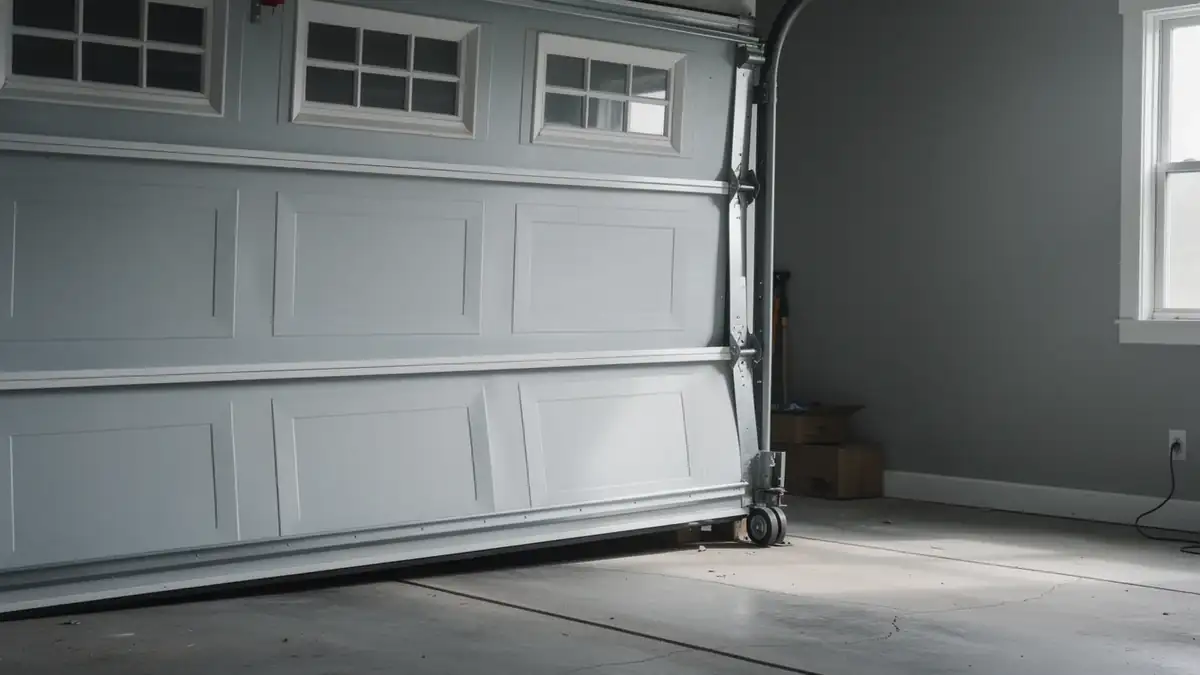
What Is Going On
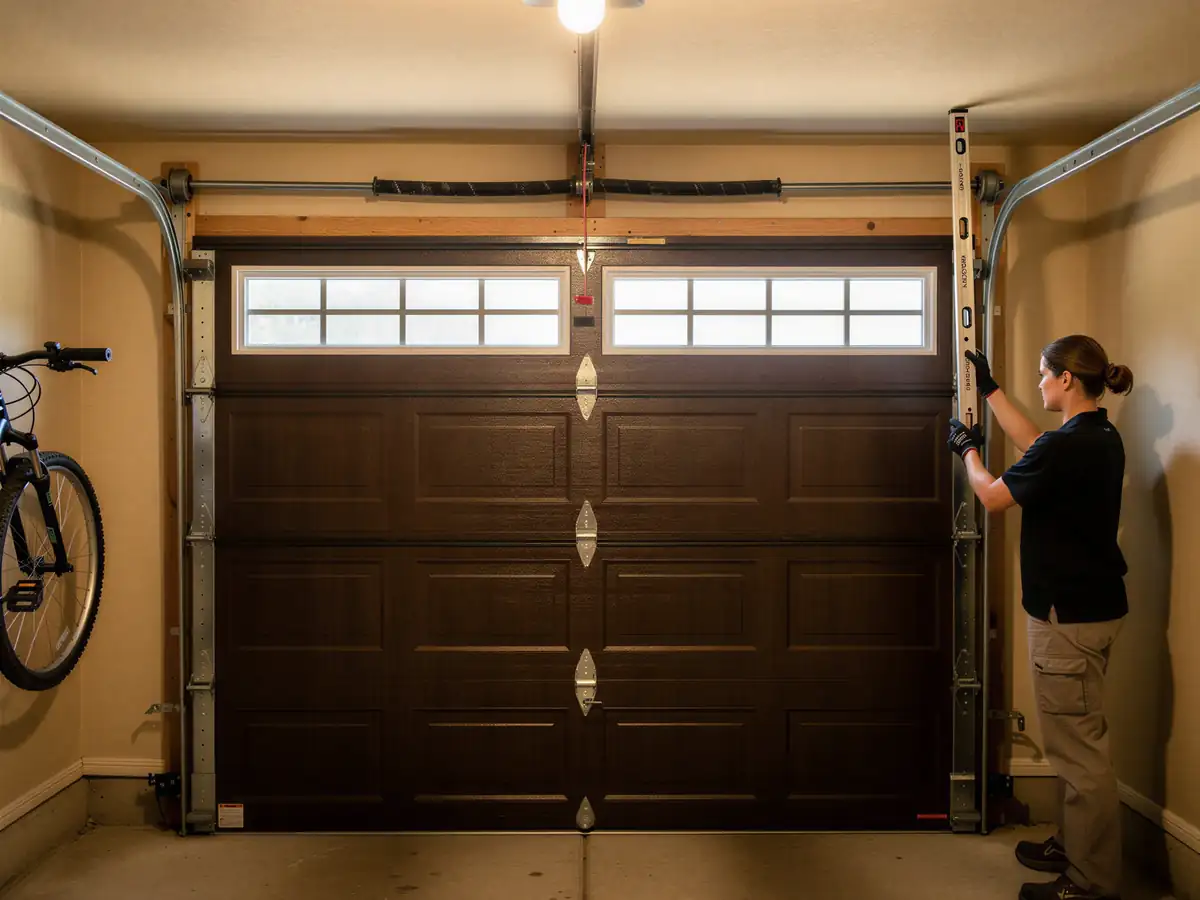
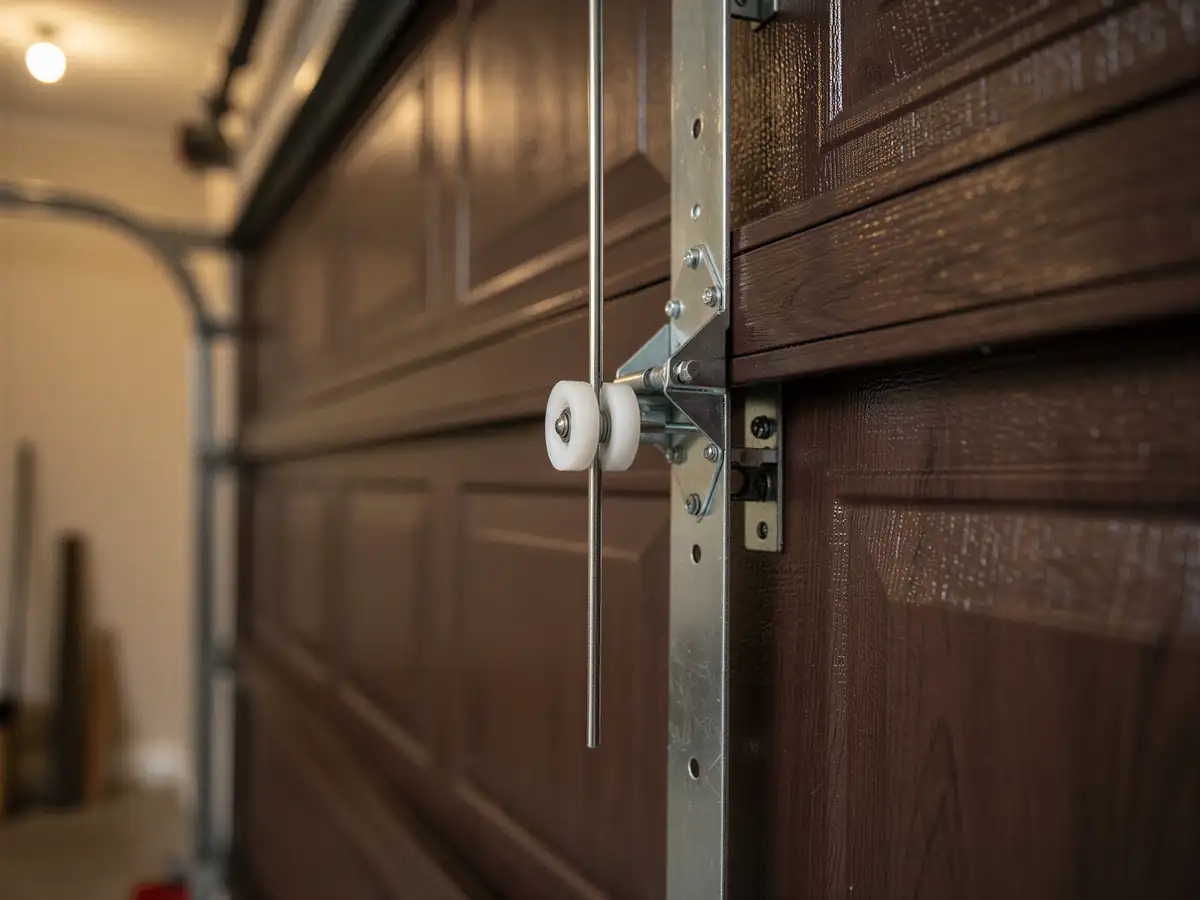
When a door comes off track, the rollers have slipped out of the steel channel that's supposed to guide them up and down
Sometimes it's one roller riding loose on a bent section. Sometimes the whole panel has walked sideways and is binding against the frame. Either way, the door isn't going anywhere safely until someone puts it back in line.
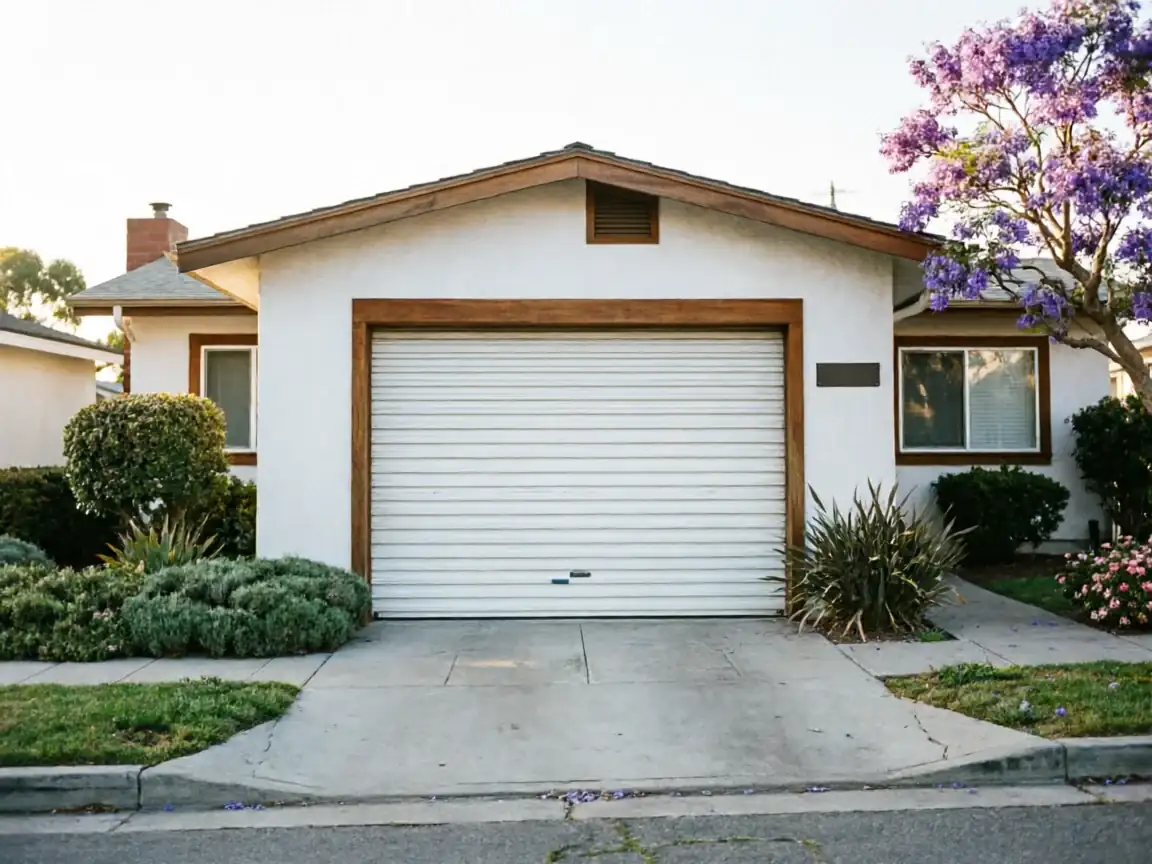
Most garage doors in Santa Clara sit on houses built between 1947 and 1987
With the bulk going up in the 1960s and 70s. That matters because track brackets from that era were fastened into jamb framing that's had sixty-plus years to shift, settle, and dry out. The track itself is often original. Steel track doesn't wear out fast, but the wood it's bolted to does move, and once a bracket backs out even a quarter inch, the whole alignment is off and a roller eventually jumps the rail.
On a lot of these houses the symptom shows up as a scraping sound on one side before the door ever visibly leans
That's the track pulling away from the jamb, not the roller failing first.
What the Weather Here Does to It
Santa Clara sits in a mild temperate band, so you're not dealing with the freeze-thaw cycles that heave foundations and twist track brackets loose in colder parts of the country. That's genuinely good news for hardware longevity. A track here doesn't get the yearly expansion-and-contraction beating that shortens its life elsewhere.
But mild weather cuts the other way too. Because nothing forces a yearly inspection the way a hard winter does, tracks here often go decades without anyone checking bracket torque or roller wear. The hardware isn't being attacked by weather, it's just slowly loosening from age and use, and there's no seasonal cue that tells an owner to look. A door can be three or four years into a slow drift before it's noticeable, because the climate never gives it a dramatic failure point to force the issue.
When Waiting Is Fine
Not every off-track symptom means stop using the door today. If it's a single roller rattling near the bottom of the track on an otherwise smooth-running door, that's wear you can usually schedule rather than treat as an emergency. The same goes for a faint scrape that only shows up on humid mornings and goes quiet the rest of the day.
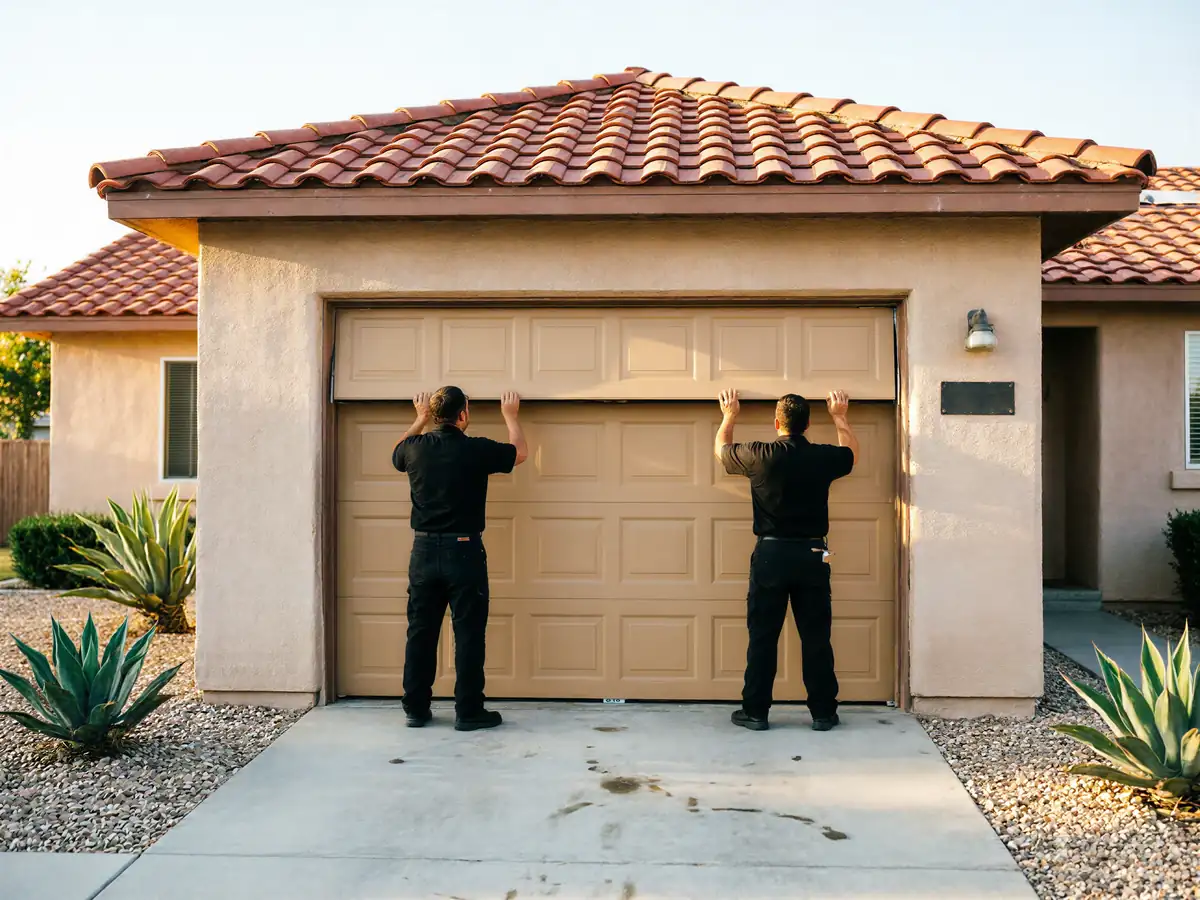
What changes that calculus is a door that's visibly cocked, one that's stopped moving freely by hand, or a cable that's gone slack on one side. At that point the track has usually separated enough that the next cycle could pull a roller clean out of the rail, and that's not a wait-and-see repair anymore.
We'll say plainly: we don't recommend running a door that's already popped off one side, even for a day, to get your car out. It's a short job to reset it properly and a much longer, costlier one once a bent track or a cracked stile gets added to the list.
Where People Go Wrong
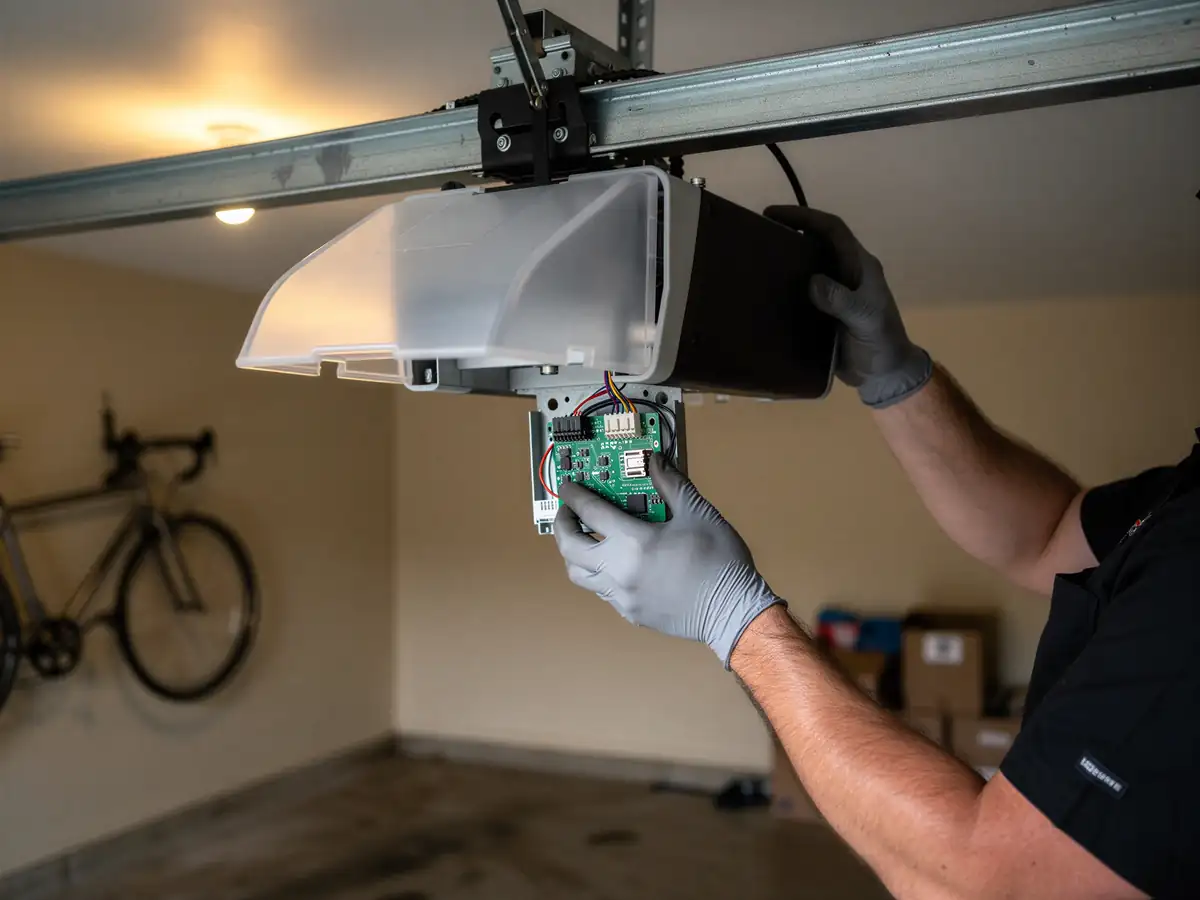
The most common mistake is forcing the opener to keep cycling a door that's already binding
The motor doesn't know the track is out of alignment, it just keeps pulling, and that's how a simple bracket fix turns into a bent track or a torn panel seam.
The second mistake is specific to this area's housing stock
Owners assume that because the track hasn't rusted or cracked, it's fine. With a median build year of 1964 across Santa Clara, a lot of garages still have the original horizontal track runs, and steel track from that era can look perfectly sound while the brackets holding it to a sixty-year-old jamb have backed out enough to let the whole rail flex under load. Looks fine and holds fine are two different things on hardware this old.
The third is trying to re-seat a roller by hand while the door is under spring tension
On a torsion system that's not a DIY adjustment, and it's one of the more common ways a minor track issue turns into an injury.