What Causes It Around Here
Cupertino sits five miles from our shop in Santa Clara
Close enough that a tech can look at a spring or opener the same day without the trip eating the whole afternoon. That distance matters less for speed than for what we load on the truck - we know before we leave what era of hardware we're likely to find once we get there.
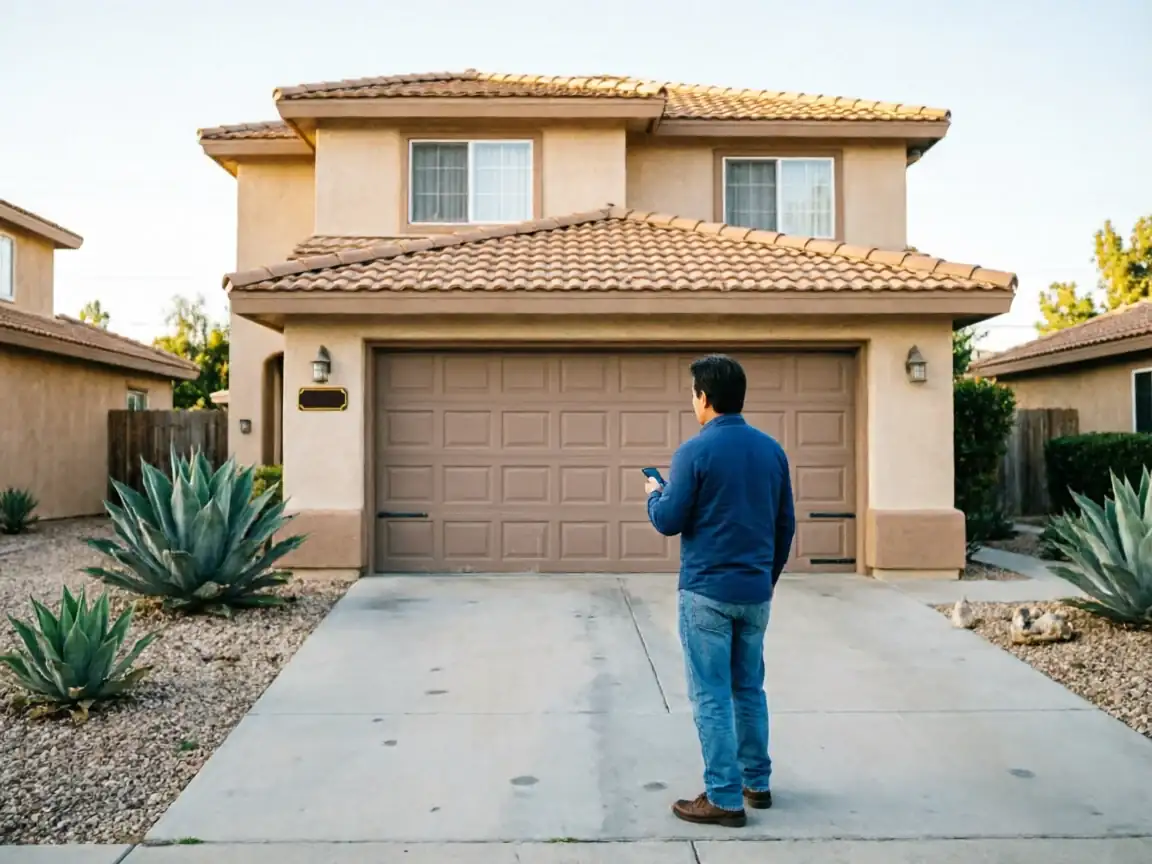
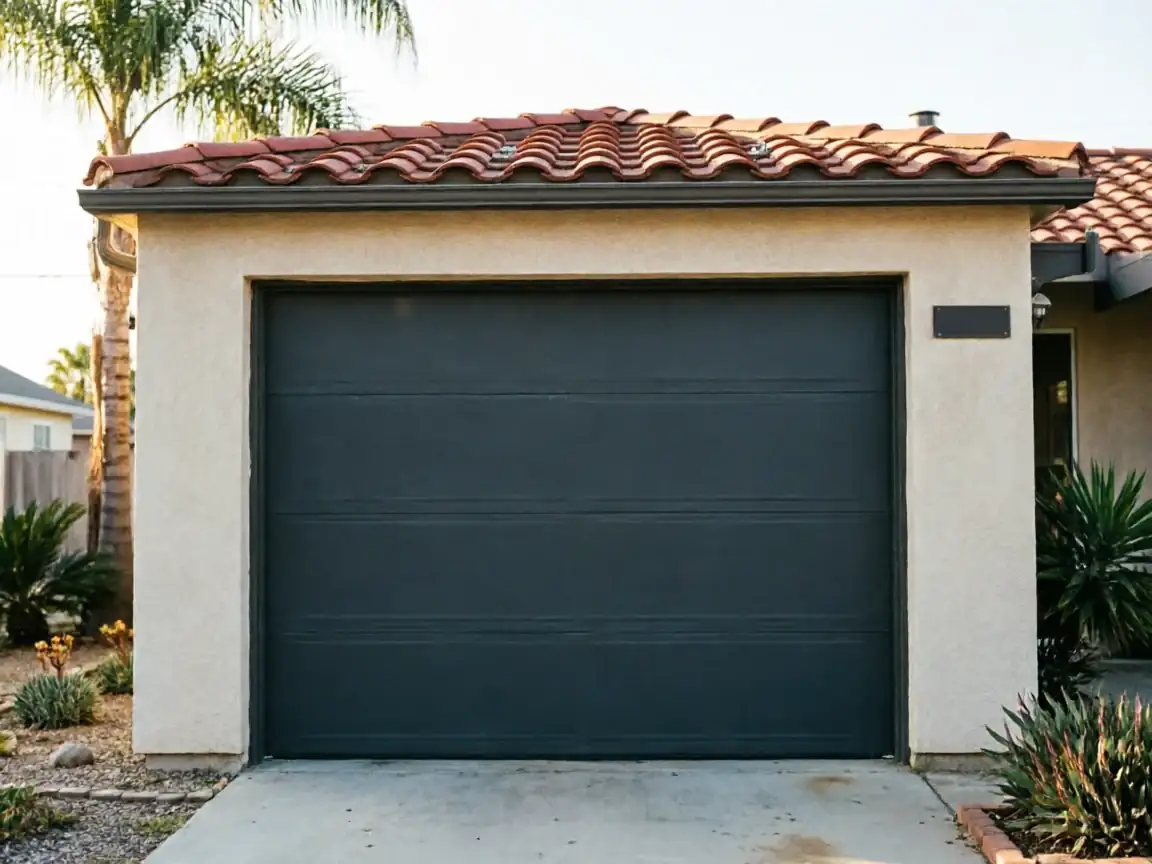
Most houses in Cupertino went up around 1973
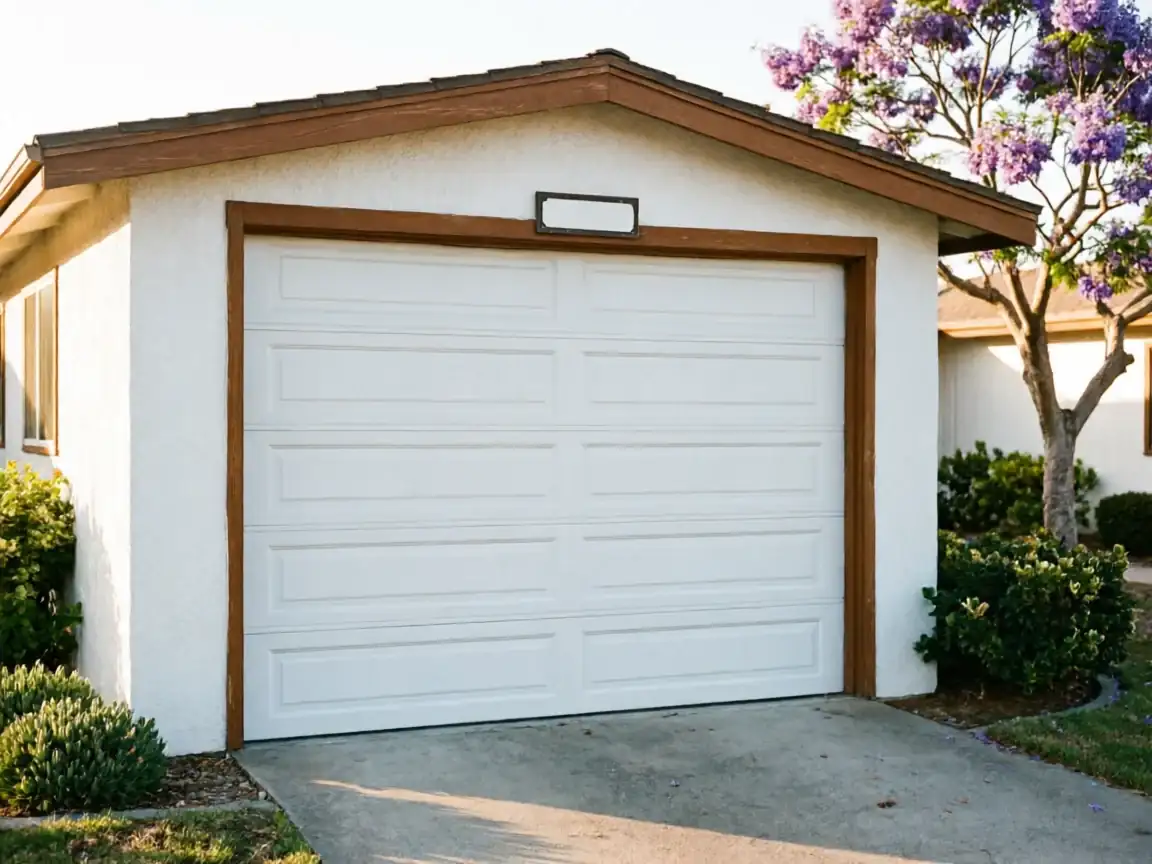
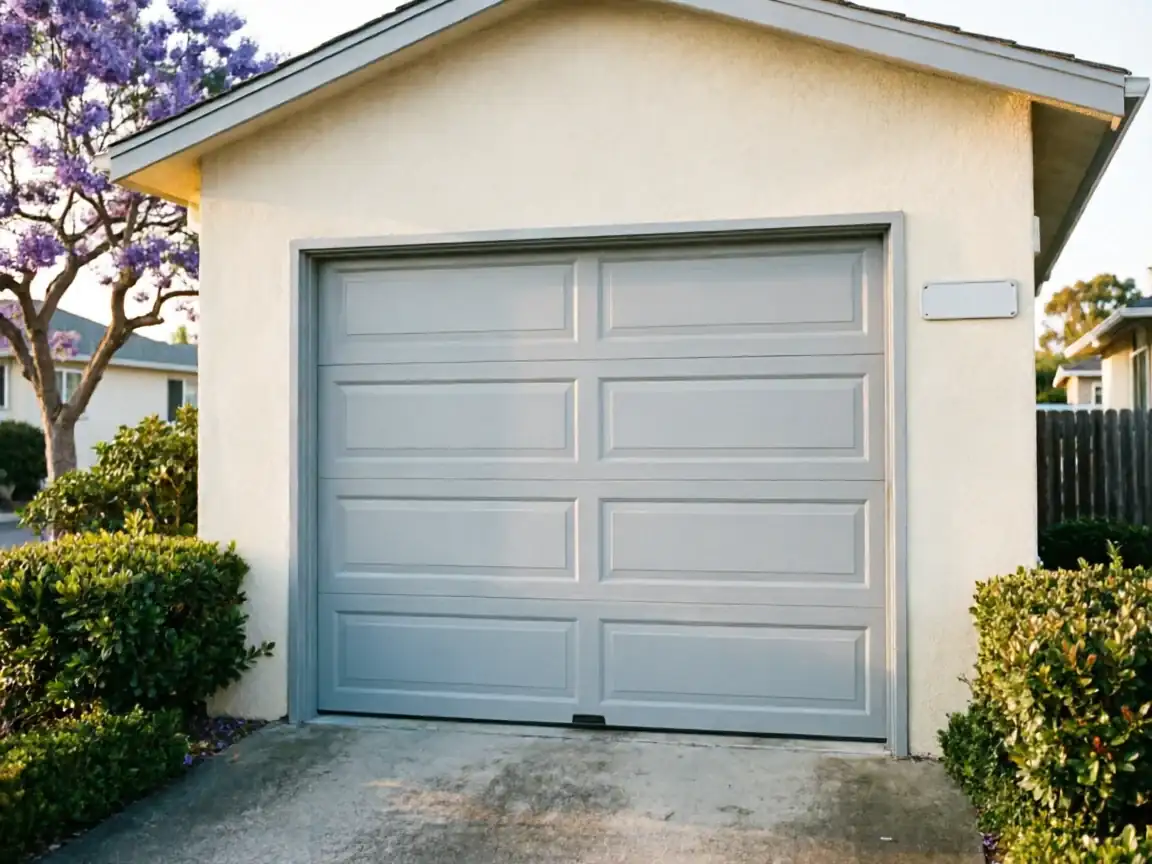
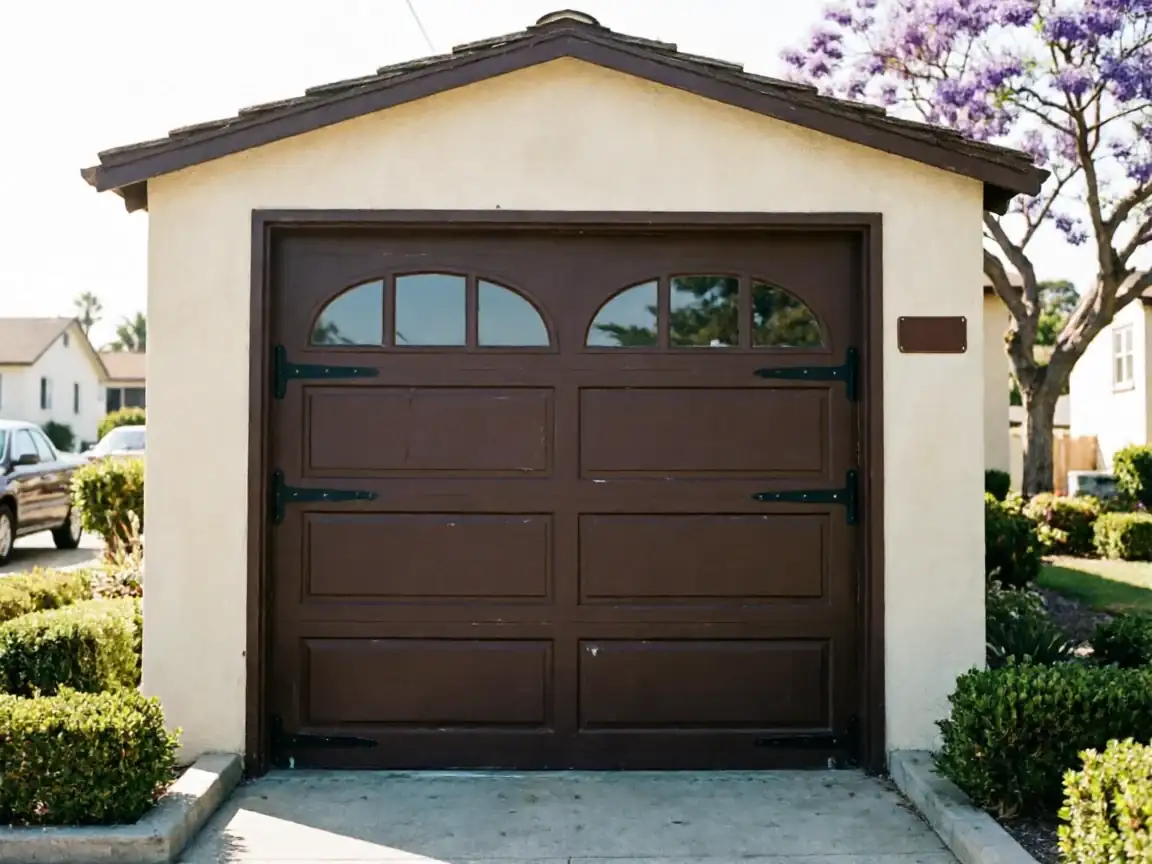
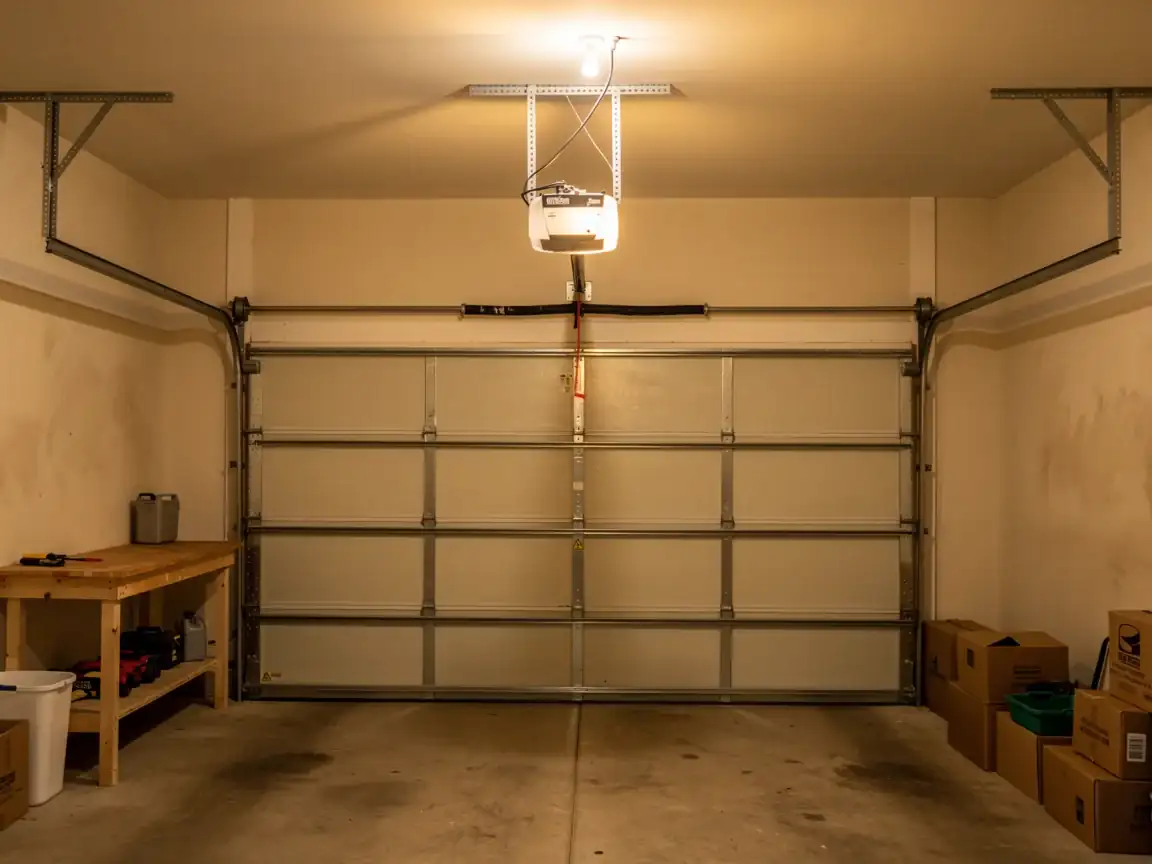
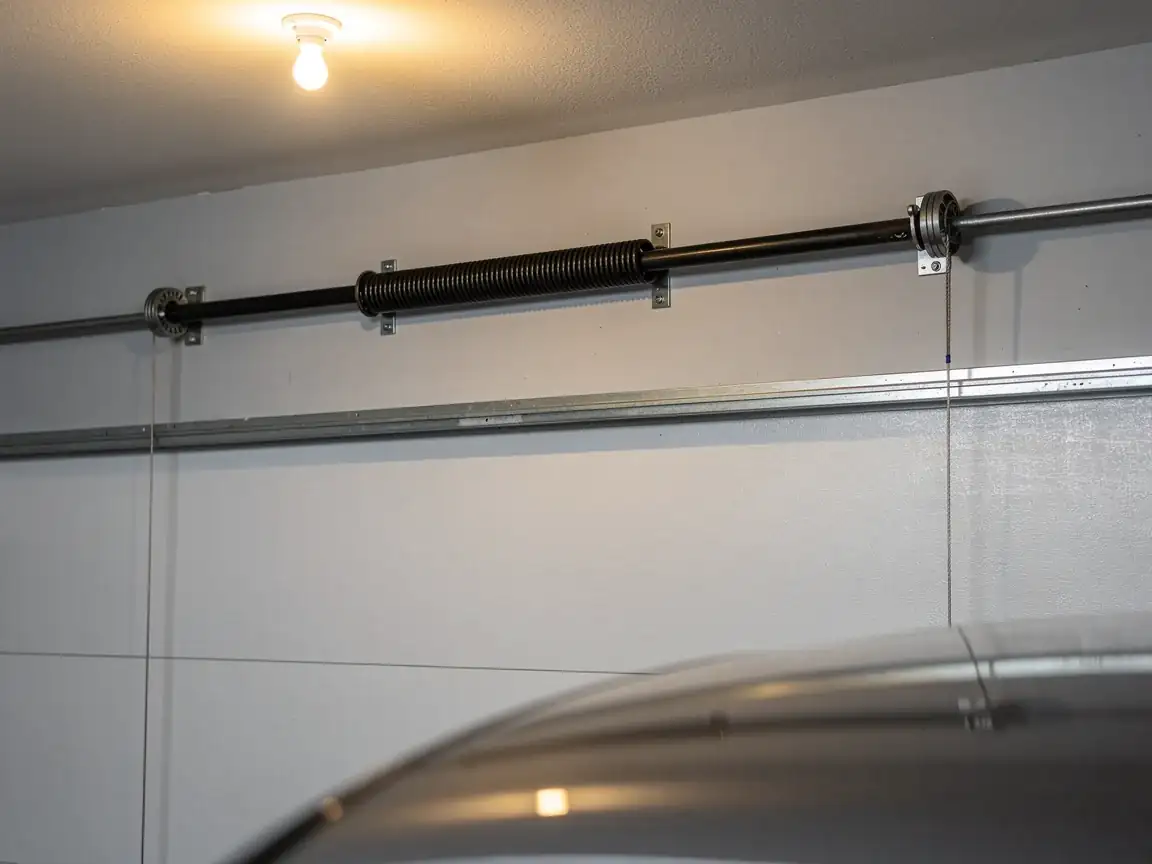
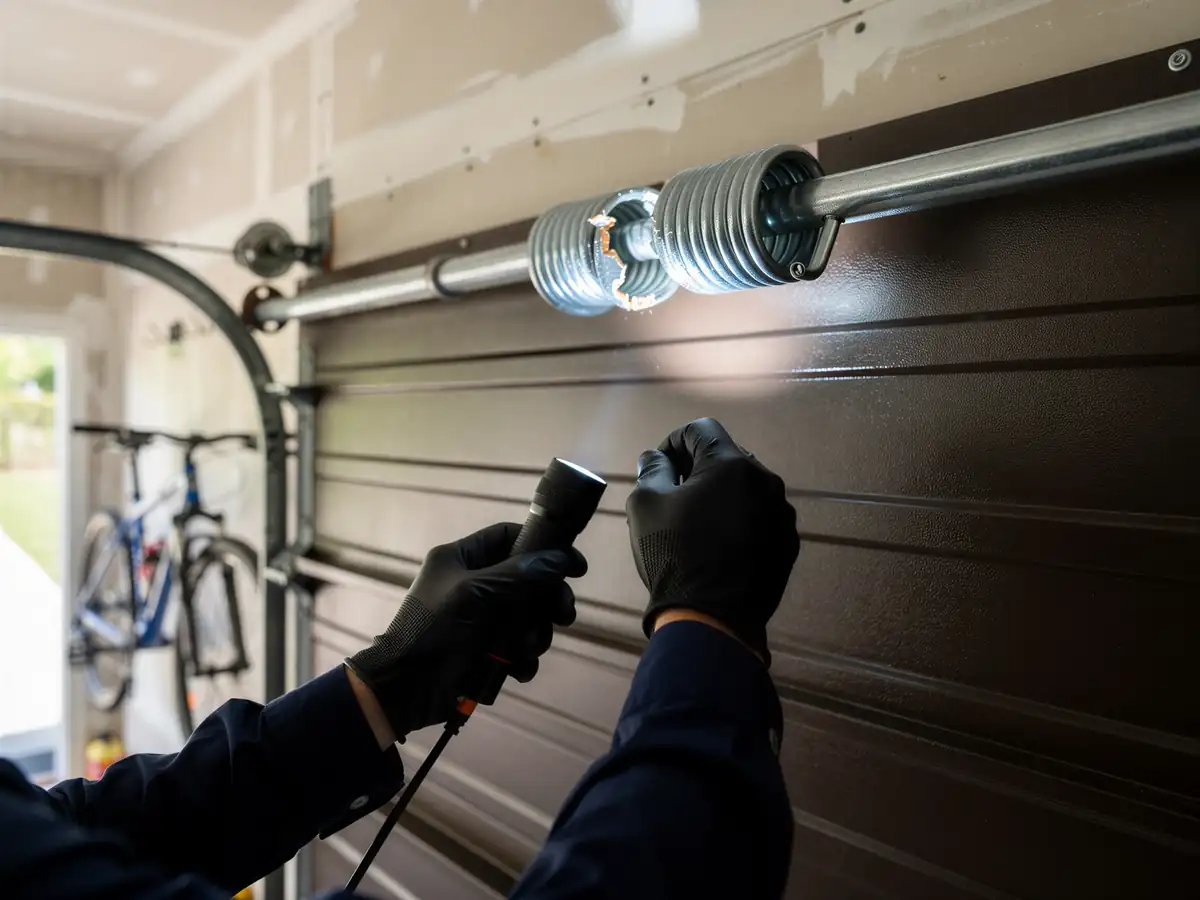
Right in the middle of the 1947-1987 window that defines this whole part of the valley. That means torsion springs rated for the original door weight, openers that have been swapped once or twice since but still bolt to the same worn bracket, and steel track that's taken forty-plus years of expansion and contraction without much drama, because the climate here stays mild rather than swinging hard between extremes. The springs wear out from cycle count, not weather. A door opened twice a day for fifty years has gone through more lifts than the spring was ever rated for, and that's the call we get most: the spring just lets go, usually on a cold morning when the metal's a little stiffer than usual.
Can You Do This Yourself
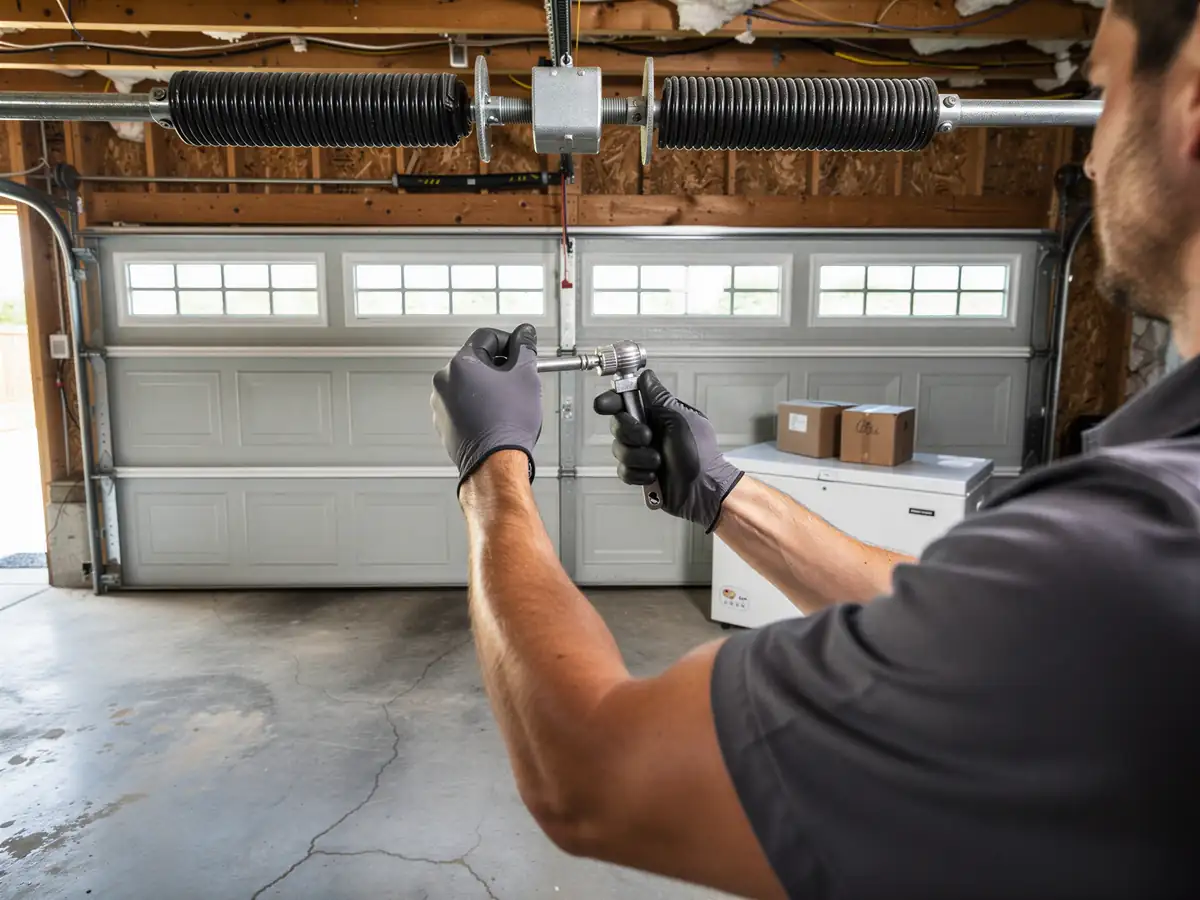
A loose roller or a noisy hinge, sure, have at it with a wrench and some white lithium grease. A torsion spring is a different animal. It's wound under enough tension to break a wrist or worse if the winding bars slip, and the springs sized for a 1970s-era door in this area aren't always the same wind or diameter you'll find off the shelf at a hardware store.
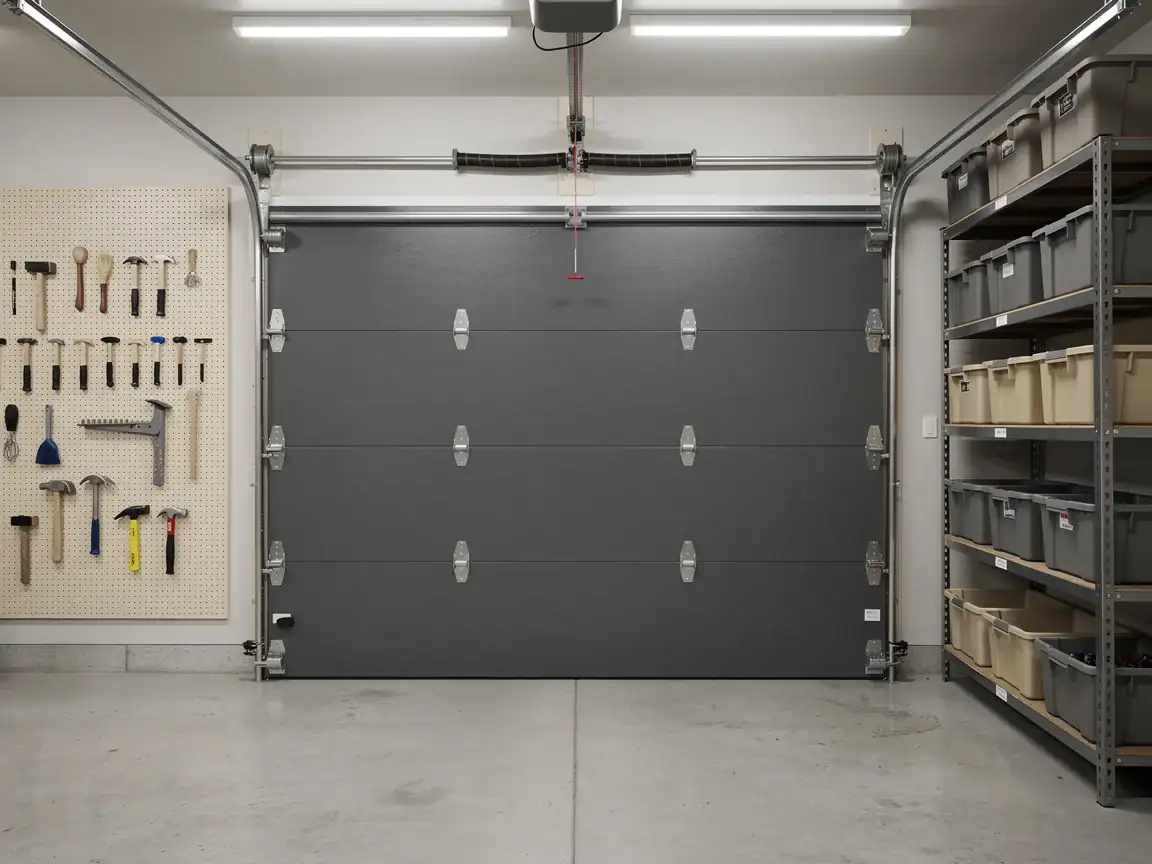
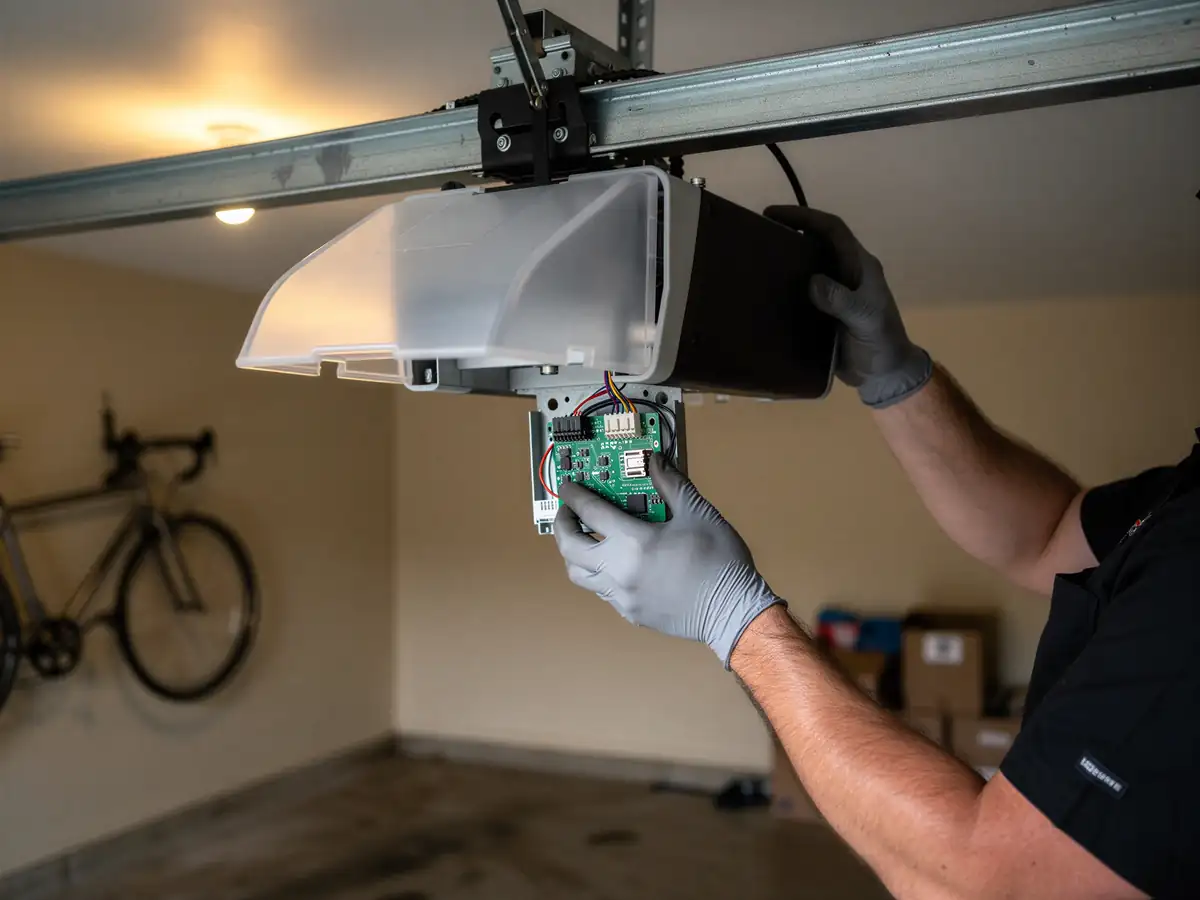
Openers are a middle case. Swapping the logic board or a sensor is doable if you're patient and the wiring diagram survived. But if the opener is original to a house built in the early '70s, the mounting hardware and the travel limits are often set up in ways that don't match a modern kit, and forcing a new unit onto old brackets is how people end up calling us anyway, after the door's already come off track. If you're not sure which kind of job you're looking at, send a photo before you start pulling anything apart.
What You Are Seeing
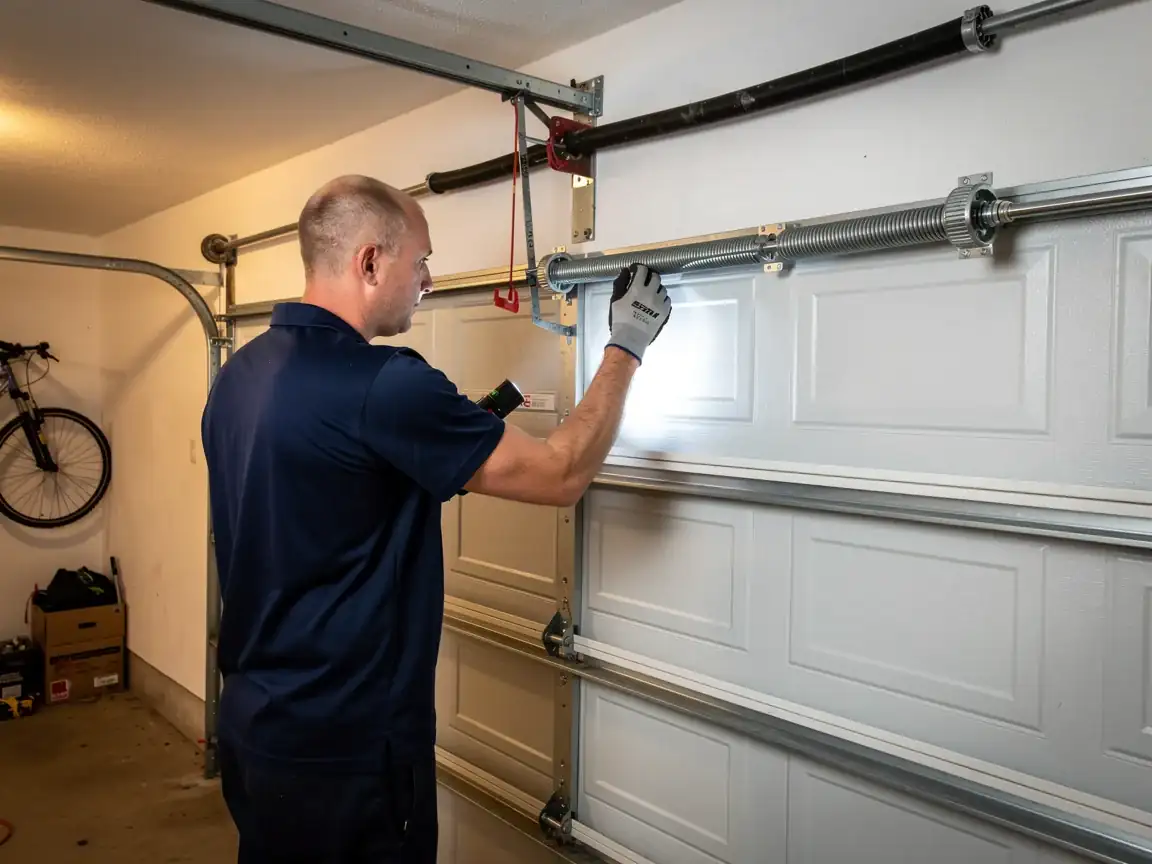
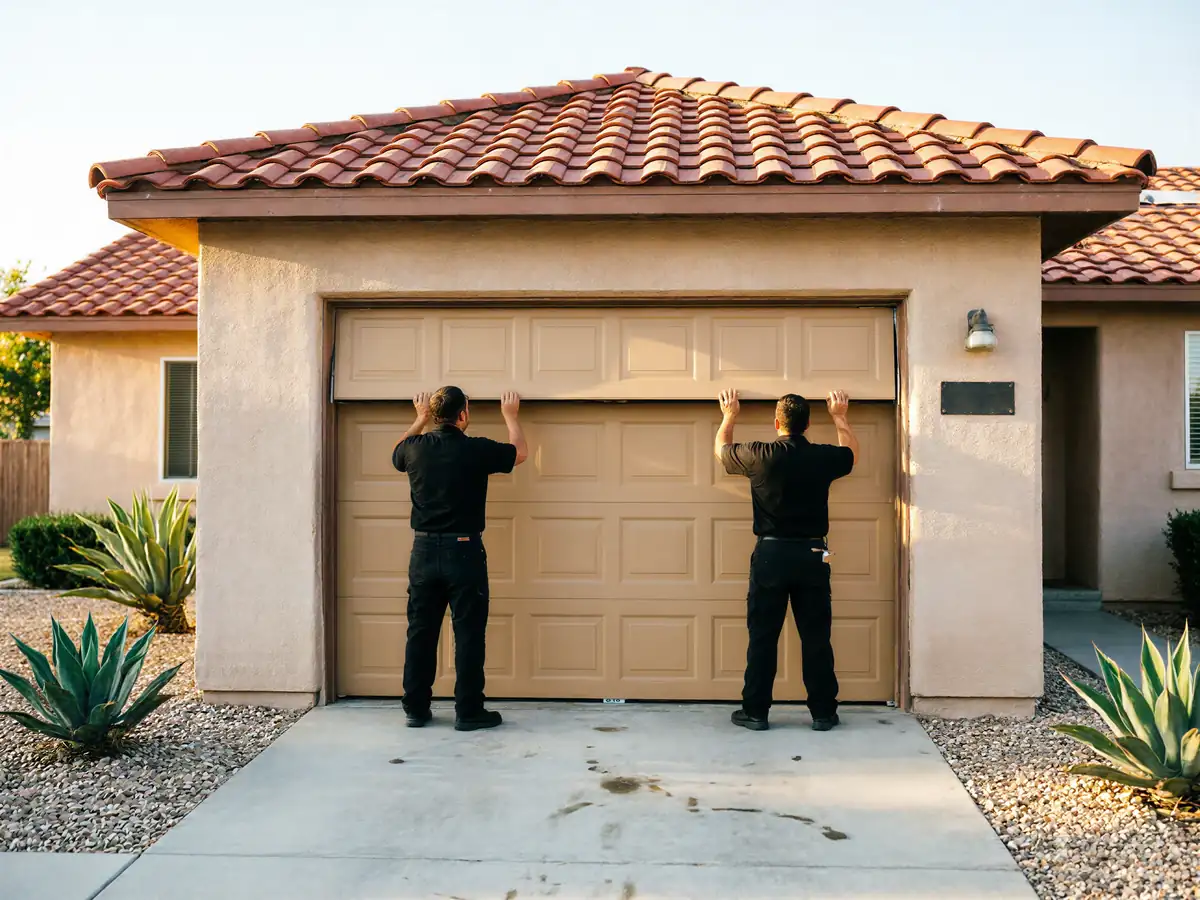
A door that won't budge and a garage full of what sounds like a gunshot a few hours earlier is almost always a broken torsion spring - common enough on doors from this era that it's the first thing we check. A door that opens but drifts shut on its own, or feels heavier on one side than the other, points to a spring that's weakening rather than broken, or cables that have started to fray at the drum.
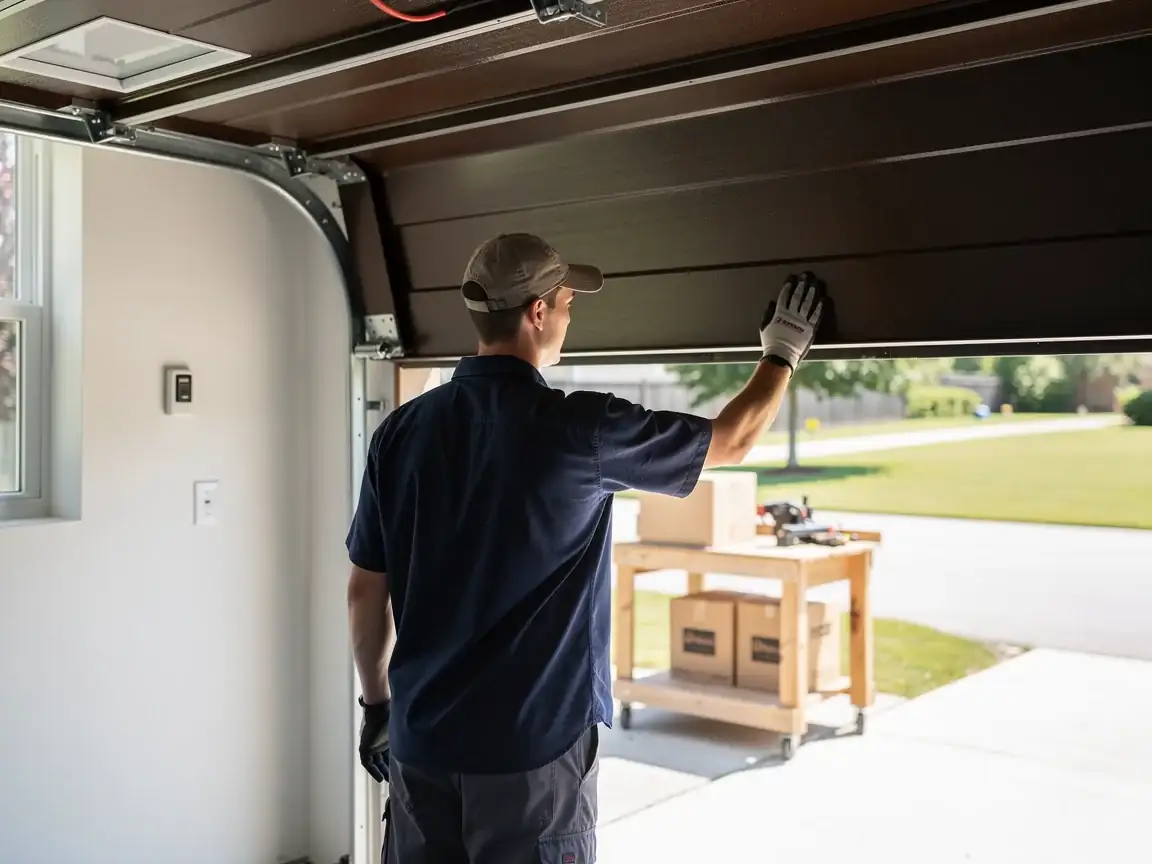
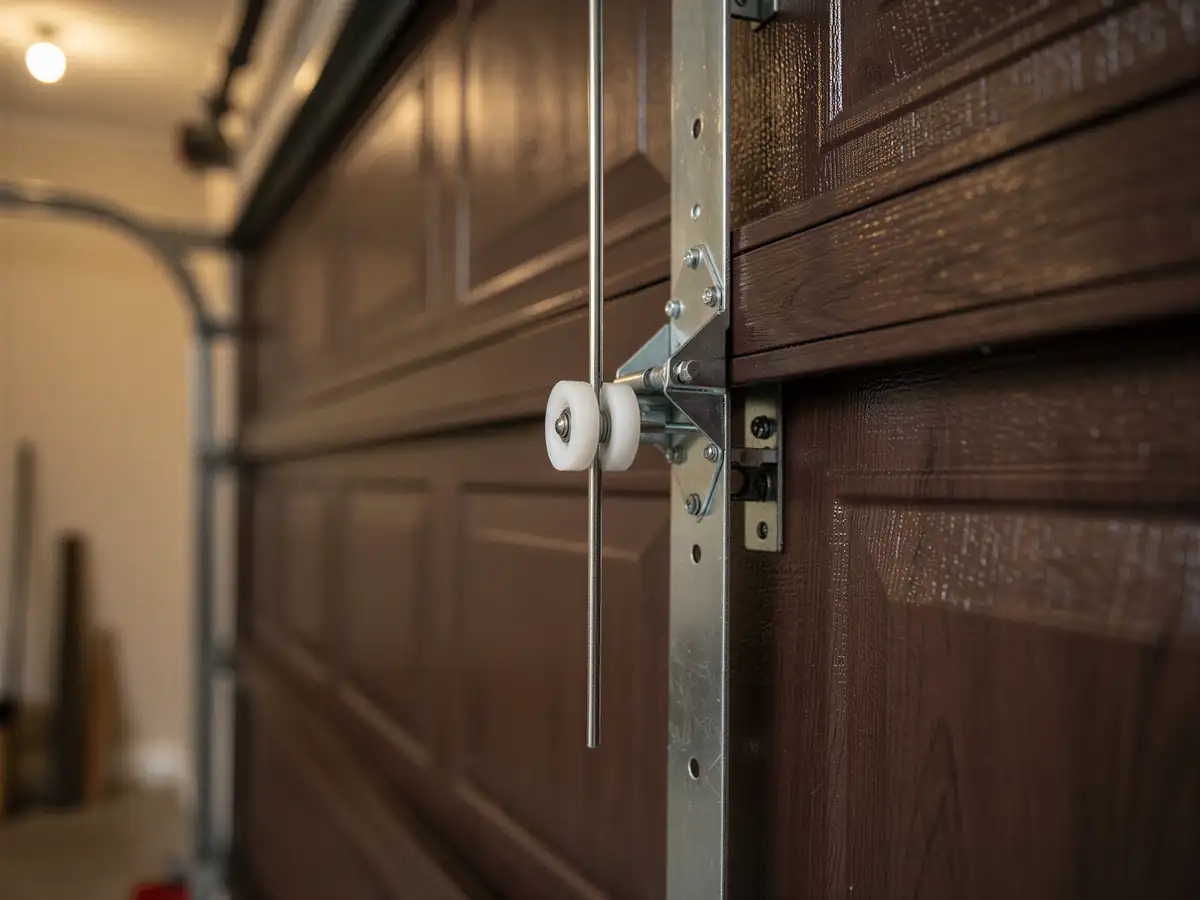
If the opener runs but the door doesn't move, that's usually the trolley or the drive gear, not the motor itself - a cheaper fix than most people expect. Grinding or popping from the track usually means a roller's finally given out after decades of the same bearing surface; on houses this age, replacing a full set of rollers while the track's already exposed is often the better call than replacing one at a time.
Where This Job Goes Sideways
The trouble spot on a Cupertino call is almost never the spring itself
It's what the spring was holding together. On a door that's been running since the early '70s, pulling the broken spring sometimes reveals a bottom bracket worn thin, or cable drums that are one more cycle from failing too. Fixing the spring and ignoring the rest means we're back in a few months for the drums.
The other place it goes sideways is parts
Some of the openers and track hardware from this build era aren't made anymore, and a replacement part has to be close enough in size and rating to do the job safely - that can mean a short wait rather than a same-visit fix. We'll tell you up front if that's the case rather than bolt on something that doesn't fit right. Honestly, if a door's hardware is original and failing in two or three places at once, replacing the door is usually cheaper over time than chasing individual repairs.
What You Pay
We don't have a posted price list for Cupertino calls specifically, and we're not going to make one up here. What we can tell you is how the estimate gets built: the drive from Santa Clara, the part itself, and the labor for the specific failure - spring, cable, opener, or track. A straightforward torsion spring replacement is a different bill than a bent track that's pulled a panel out of alignment, and we won't know which one you've got until a tech has eyes on it.
Given that household incomes in this part of the service area run well above the regional median, we still price the work the same regardless of the address - the job determines the cost, not the ZIP code. Ask for the number before anything gets fixed, not after.
How to Book
Call and describe what the door's doing - stuck down, stuck up, loud, drifting, or dead opener. That tells us what to load before the truck leaves Santa Clara, which is the main thing that keeps a five-mile trip from turning into two trips. You can also check our Cupertino service area page or see the full range of what we handle out of the shop on the Santa Clara garage door repair page.